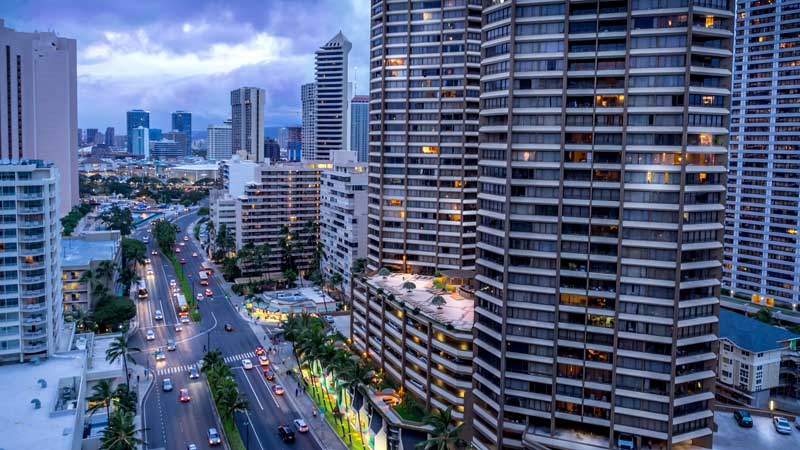
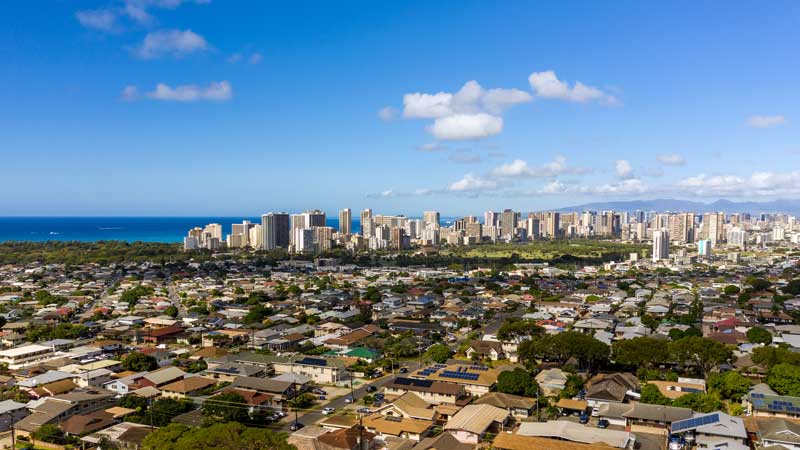
Waikiki shoreline with tourists in Honolulu, Hawaii

Hawaii remains one of the most unique real estate markets in the United States — high cost of living, limited land, and strong demand from local families and military buyers. Because of this, VA loan limits here work differently than in most states and can have a huge impact on how much home you can buy with zero down.

Below is the most up-to-date breakdown of 2026 VA Loan Limits in Hawaii, including Honolulu County’s conforming limit, entitlement rules, jumbo thresholds, and example calculations to help you understand exactly where you stand.

Quick Summary: 2026 VA Loan Limits in Hawaii

Hawaii’s high home prices make VA loan limits especially important for veterans and active-duty buyers. In 2026, Honolulu County’s VA conforming loan limit is $1,228,500, which determines how much home you can buy with zero down if you have partial entitlement. Buyers with full entitlement have no VA loan limit at all. Understanding entitlement status, county limits, and VA jumbo rules can significantly increase your buying power in Hawaii’s competitive real estate market.

TL;DR: 2026 VA Loan Limits in Hawaii

  • Honolulu County 2026 VA loan limit: $1,228,500
  • Full entitlement = no VA loan limit (buy at any price with $0 down if qualified)
  • Partial entitlement = zero-down limit tied to county loan limits
  • VA guarantees 25% of the loan amount above the county limit
  • Buyers may need a small down payment only on the amount above their zero-down limit
  • VA loans in Hawaii often outperform conventional jumbo loans with no PMI and flexible DTI rules

Key Takeaways: How VA Loan Limits Impact Hawaii Buyers

  • VA loan limits matter most in Hawaii due to high home values and jumbo pricing
  • Buyers with full entitlement have unlimited zero-down purchasing power
  • Partial entitlement buyers can still purchase high-priced homes with minimal or no down payment when calculated correctly
  • VA loans offer major advantages over jumbo loans, including no PMI and better rates
  • Understanding county limits and entitlement status can mean the difference between renting and owning in Hawaii
  • Used strategically, VA loans provide some of the strongest buying power in the entire U.S. housing market

2026 VA Loan Limit in Hawaii (Honolulu County)

$1,228,500

This is the 2026 conforming loan limit for Honolulu County, which the VA uses when calculating how much “zero-down power” you have if you do not have full entitlement.

If you have full entitlement, there is no VA loan limit — meaning you can buy at any price with $0 down as long as you qualify.

Full vs. Partial Entitlement (Easy Explanation)

Full Entitlement

You have full entitlement if:

  • You’ve never used your VA loan
  • You paid off a previous VA loan and sold the home
  • Your previous VA loan was foreclosed/bankrupt, but benefits have since been restored

Result:
You can buy any price home with $0 down — no loan limit.

Partial Entitlement

You have partial entitlement if:

  • You currently have a VA loan on another home
  • You’ve defaulted before and have reduced entitlement
  • You refinanced out of a VA loan, but still have entitlement tied up

Result:
Your zero-down limit depends on the county loan limit (in this case $1,228,500).

How to Calculate Your Zero-Down Buying Power (Partial Entitlement)

VA guarantees 25% of the loan amount above the county limit.

VA Formula:

(County Limit × 25%) − Entitlement Already Used = VA Guarantee Available

Then:
VA Guarantee Available × 4 = Max zero-down loan amount

Example Calculation

Let’s say:

  • You used $150,000 of entitlement on a home in another state
  • You want to buy in Honolulu County

Step 1 — Maximum guarantee based on county limit

$1,228,500 × 25% = $307,125

Step 2 — Subtract entitlement already used

$307,125 − $150,000 = $157,125 VA guarantee left

Step 3 — Multiply by 4 to get your zero-down limit

$157,125 × 4 = $628,500 max purchase price with $0 down

If you buy above that, you would need a small down payment only on the amount over your limit.

Why Hawaii Buyers Benefit Most from VA Loans

Zero down up to (or beyond) $1.2M

This is life-changing in a high-cost housing market.

No mortgage insurance

No PMI = lower monthly payment.

Higher DTI flexibility

Especially helpful for Hawaiʻi’s higher cost-of-living.

VA loans beat jumbo rates

VA loans in Honolulu frequently outperform conventional jumbo pricing.

Refinance anytime with the IRRRL

Simple, fast, no appraisal required.

VA Jumbo Loans in Hawaii

A “VA Jumbo Loan” simply means:

  • The loan amount is above the county limit ($1,228,500)
  • You still get VA loan perks
  • You may still qualify with $0 down if you have full entitlement

Many active-duty buyers in Honolulu purchase $1.7M – $2.2M homes with VA financing.

2026 VA Loan Limits by Hawaii County

County2026 Conforming Loan Limit
Honolulu$1,228,500
Maui$1,063,200
Kauaʻi$1,006,250
Hawaii (Big Island)$747,500

Note

Only Honolulu, Maui, and Kauaʻi are considered “high-cost counties”, which increases the loan limit above the standard U.S. baseline.

Who This Guide Helps Most

  • Active-duty service members PCS’ing to Oʻahu
  • Veterans transitioning out of the military
  • Reservists & National Guard
  • Military families looking to upgrade
  • Investors wanting to keep their first VA loan property

Hawaii’s VA loan rules can be confusing — especially with second-tier entitlement or buying a second VA home loan — but used correctly, they offer unmatched purchasing power.

Final Thoughts

The 2026 VA loan limit in Hawaii of $1,228,500 means veterans and active-duty buyers can compete in one of the country’s most expensive real estate markets — often with zero down and significantly lower payments than conventional options.

Waikiki Beach Front

If you’ve ever tried to figure out “How much mortgage can I actually afford?” you’ve probably seen every rule of thumb out there:

  • “Spend no more than 28% of your income.”
  • “Cap your DTI at 45%.”
  • “Your mortgage payment should be 2.5x your annual salary.”

Those rules don’t work for everyone — and they especially don’t work for military families, VA loan buyers, or people PCSing to Hawai‘i.

As a mortgage broker who has helped hundreds of service members, veterans, and Hawai‘i families, I can tell you this:

Affordability is personal. And it’s different in Hawai‘i.

This guide will walk you through the smartest, most realistic way to determine your actual, comfortable mortgage affordability — not just the textbook version.

What Makes My Perspective Different?

After working with hundreds of clients over the years — from E-3s to O-6s, from first-time buyers to seasoned investors — I’ve seen every affordability scenario you can imagine.

And here’s the truth:

Most people underestimate what they can afford.
Most calculators fail to factor in Hawai‘i.
And VA buyers have advantages no other loan program offers.

My experience across diverse real-world situations allows me to give clients clearer, more confident guidance than they typically get from big mainland lenders, online calculators, or bankers who don’t specialize in VA loans.

Why Hawai‘i Is Different: Your Buying Power Is Usually Higher Here

When buyers PCS to Hawai‘i, they often assume home prices will crush their budget. But this is what surprises them:

  1. Your BAH is significantly higher in Hawai‘i
    For many ranks, BAH increases by thousands per month compared to most mainland duty stations.
  2. You receive COLA
    Cost-of-Living Allowance is tax-free income that boosts your affordability — but most loan officers on the mainland forget to consider it.
  3. VA loans allow higher DTIs than conventional loans
    Conventional loans typically cap out around a 50% DTI, while VA loans can often approve 60–65% DTI with strong residual income.

That’s a massive difference.

Result?

Many military families actually qualify for more housing in Hawai‘i than they did on the mainland — even though home prices are higher.

Real Case Study: “We Thought We Could Only Afford $500,000…”

A client PCSed from a mainland base, expecting their budget to stay the same. They were approved for around $500,000 at their previous station, so they assumed that was their limit in Hawai‘i.

But once we recalculated:

  • Their BAH increased by thousands per month
  • They added COLA to their qualifying income
  • VA allowed a higher DTI, thanks to high residual income

Their new max affordability wasn’t $500,000.

It was well into the $700k+ range.

This is why Hawai’i’s affordability can’t be calculated the same way as the mainland.

The Real Question Isn’t “How Much Can I Afford?

It’s “How Much Do I Want to Afford?”

Here’s something I tell every client:

“The lender number isn’t the most important number — your comfort number is.”

Just because you can afford a certain mortgage doesn’t mean you should.

So instead of starting with DTI or max approval, I start with a simpler question:

“What monthly payment feels right for you?”

Some clients want to stay within BAH.
Others are happy to go slightly above to get a better location, larger home, or a place that will work as a long-term rental after they PCS out.

Everyone’s comfort level is different — and it should be.

This approach dramatically reduces financial stress and keeps buyers firmly in the driver’s seat.

VA Loan Advantages That Increase Affordability

VA loans give military buyers unique strengths that directly impact affordability:

No down payment required

Saves cash and increases purchasing power.

Lower interest rates than conventional

More home for the same payment.

Higher allowable DTI

Often up to 60–65% depending on residual income.

No mortgage insurance (PMI)

Lowers monthly payment significantly.

Ability to use BAH + COLA

Powerful for Hawai‘i buyers.

When you combine these, VA buyers often qualify for more than they ever expected.

Factors That Actually Determine What You Can Afford

Let’s break down the practical components of affordability — not the generic ones.

1. Your Monthly Payment Target (Most Important)

This includes:

  • Principal + interest
  • Property taxes
  • Homeowners insurance
  • HOA fees (common in Hawai‘i condominiums)
  • Utilities and lifestyle costs

Your personal comfort level takes priority over any lender formula.

2. Your DTI (Debt-to-Income Ratio)

For VA loans, this can go much higher due to:

  • residual income
  • tax-free allowances
  • low default rates on VA loans

This gives VA buyers far more breathing room.

3. Your Duty Station’s BAH

This is often the biggest affordability booster when PCSing to Hawai‘i.

4. COLA (Cost-of-Living Allowance)

Tax-free income most mainland lenders forget to count — but it matters.

5. Hawai‘i Insurance + HOA Considerations

A few things to know:

  • Hurricane insurance is required for most homes
  • Flood zone insurance varies
  • HOA fees can range widely

But these are predictable and easy to build into a personalized affordability plan.

How Technology + AI Increase Your Buying Power

Mortgage brokers who rely on modern tech — like I do — have major advantages:

Faster rate shopping

We instantly compare wholesale VA rates across lenders.

Lower pricing

Mortgage brokers are often cheaper than retail lenders.
And VA-specialized brokers (like me) can often beat even other brokers.

Less overhead = better rates

Tech-efficient lenders pass savings directly to you.

Smart tools for affordability planning

From instant fee comparisons to real-time rate models, AI helps clients make clearer decisions with less stress.

Ways to Stretch Your Affordability Even Further

If a client is right on the edge of their comfort zone, we have strategies:

1. Temporary Buydowns (1-0, 2-1, 3-2-1)

Lower your rate for the first 1–3 years.

2. Lender Credits

Reduce closing costs (in exchange for a slightly higher rate).

3. Creative Loan Structuring

Optimizing DTI and residual income to maximize VA approval power.

4. Use BAH Strategically

Some clients cover mortgage with BAH and preserve cash for other goals.

So… How Much Can You Afford?

If you’re military, PCSing to Hawai‘i, or using your VA loan, the “you can only afford X” calculators online are usually wrong — sometimes by a lot.

The best way to determine your real affordability is a quick, personalized breakdown based on:

  • your BAH
  • your COLA
  • your monthly comfort target
  • your debts
  • your timeline
  • your long-term PCS plan

It takes about 10 minutes, and it gives you an accurate, stress-free number you can trust.

Final Thoughts

Mortgage affordability shouldn’t feel overwhelming — and it shouldn’t be based on rigid formulas that don’t apply to military families or Hawai‘i buyers.

With the combination of:

  • higher BAH
  • COLA
  • VA loan advantages
  • personalized comfort-based planning
  • technology-driven rate comparisons

You’re likely able to afford more home than you think — and with less stress.

If you want a personalized affordability check or just want to talk through your situation, I’m here to help.

Eli — The VA Loan Guy
Military-friendly. Hawai‘i-based. Technology-powered.
And here to make sure you buy a home you can truly afford — comfortably.

Ocean Water, Waikiki Beach, and Hotel Towers

If you’re a veteran, active-duty service member, or PCS’ing to Hawai‘i, finding the right VA loan specialist matters more here than almost anywhere else.
Home prices are high, every lender’s rate is different, and Hawai‘i has unique property challenges (lava zones, catchments, condo approvals, etc.).

After 20+ years in the finance industry and hundreds of millions in VA loans funded, one thing has become absolutely clear to me:

“Price isn’t just a number — it’s the difference between a veteran paying too much or saving thousands over the life of their loan.”
Elias Halvorson, Veteran & VA Loan Broker, C2 Financial

If you want to skip straight to the short answer:

Quick Answer: Where to Find VA Loan Specialists in Hawai‘i

If you’re looking for:

  • The lowest VA loan interest rate
  • A broker who shops multiple lenders
  • A veteran who understands your situation
  • And someone who knows the Hawai‘i market island-by-island

Start here:

Top Pick: Elias Halvorson — VA Loan Broker (C2 Financial)

  • 20+ years in finance
  • Hundreds of millions in VA loans funded
  • Veteran + comes from a family of veterans
  • Specializes in Hawai‘i purchases, refinances, cash-outs & IRRRLs
  • Often reduces commission to save veterans money
  • Shop hundreds of lenders for the best pricing
  • Experienced with all islands, lava zones, water catchments & local hurdles

Broker vs Bank vs “Veteran-Focused” National Lenders

Before choosing any lender, it’s important to know the difference in how each one works:

Type of LenderWhat They DoProsCons
Mortgage Broker (like Elias)Shops rates at many lenders on your behalfCan find the lowest rate Can switch lenders if rates improve Lower feesNo downsides if experienced
Mortgage BokerOnly offers their in-house ratesSimple processCan’t shop other banks Price often not competitive
Veterans United / Navy FedNational “veteran-focused” brandsHeavy marketingOften higher rates Big lender fees Harder to compare Veterans frequently overpay

Bottom line:
A broker almost always finds better pricing — especially for VA loans in Hawai‘i.

Why Hawai‘i Veterans Need a Price-Focused Broker

Hawai‘i is one of the most expensive real-estate markets in the country. That means:

A slightly lower VA interest rate = huge monthly savings.

Even a .25% difference in interest rate can save a veteran tens of thousands over time.

That’s why I’ve made it my mission to hunt down the best pricing for veterans — and why I’m often able to beat national lenders and big banks.

Real Hawai‘i Veteran Case Studies

These are real examples of veterans who compared their loan estimate with me and saved big:

Case Study #1: Veteran Saves $400+ a Month on a Refinance

A veteran initially applied with a large, veteran-branded mortgage lender. He later asked me to compare their rate.

By switching to me:

  • Interest rate dropped by 0.625%
  • Monthly payment dropped by $400+
  • IRRRL (VA streamline refinance) was completed faster and cheaper

This is the power of rate shopping.

Case Study #2: PCS Family Saves $12,000+ Moving to Hawai‘i

A military family PCS’ing to O‘ahu received a bank’s loan estimate, then decided to get a quote from me.

By switching:

  • Closing costs dropped by over $12,000
  • Interest rate improved by 0.25%
  • They entered escrow with far less stress

One quick comparison saved them more than many families save in an entire year.

Hawai‘i Has Unique VA Loan Challenges — Make Sure Your Specialist Knows Them

This is where knowledge of Hawai‘i’s real estate truly matters. Depending on the island, your VA loan can hit issues such as:

Big Island

  • Lava zones
  • Water catchment systems
  • Off-grid properties
  • Agricultural zoning

O‘ahu / Maui / Kaua‘i / Big Island

  • Condo association approvals
  • High HOA dues
  • Special assessments
  • Resort zoning

A mainland lender has no idea how to navigate these issues.
A Hawai‘i-based broker does.

Checklist: Questions to Ask Any VA Loan Specialist in Hawai‘i

Before choosing someone, ask:

1. Are you a mortgage broker or a mortgage bank?

(Brokers can shop rates — banks cannot.)

2. How many lenders can you compare for VA loans?

(You want someone with access to dozens or hundreds.)

3. How long have you been working in the finance and VA loan industry?

(Experience matters, especially in Hawai‘i.)

4. Are you familiar with lending on the specific island I’m buying on?

(Lava zones and catchments require expertise.)

5. Do you provide a side-by-side rate comparison before locking?

(Transparency is crucial.)

6. Can you reduce your lender compensation for veterans to lower my cost?

(You do — many do not.)

Common Mistakes Hawai‘i Veterans Make

After 20 years in finance and 6 years helping Hawai‘i veterans specifically, I’ve seen the same avoidable mistakes:

  • Not shopping their lender
  • Not interviewing their loan officer
  • Assuming “veteran-focused companies” offer the best prices
  • Not asking for seller credits
  • Choosing a lender who doesn’t understand local property rules

The good news?
All of these mistakes are 100% avoidable.

So… Who Are the Top VA Mortgage Brokers Serving Hawai‘i Veterans?

While many loan officers can originate VA loans, very few:

  • Shop multiple lenders
  • Reduce their commission to help veterans
  • Have decades of experience
  • Are veterans themselves
  • Understand Hawai‘i’s unique real-estate landscape
  • Can switch lenders mid-process if rates drop

That’s why I confidently recommend myself as the best starting point for any veteran buying or refinancing in Hawai‘i.

Need Help? Get a Quick Rate Comparison or Strategy Session

If you’d like to compare your VA loan options, get a second opinion, or review your current loan estimate:
Text, call, or email me for a quick rate comparison or VA loan strategy session.
No pressure — just straight answers and the best pricing I can find.

Honolulu skyline showing urban city lights at night with milky w

PCS orders to Hawaii are both exciting and overwhelming. Service members dream of beaches, aloha spirit, and island adventures — but then reality sets in: “How will I afford housing in one of the most expensive markets in the U.S.?”

The truth is, many families pay $3,500–$4,500/month in rent on Oʻahu alone. But with a VA loan and your Basic Allowance for Housing (BAH), you can often own instead of rent, and build equity while stationed here.

In this guide, we’ll break down:

How PCS orders to Hawaiʻi are unique.

  • Why VA loans are a powerful advantage in a high-cost market.
  • How much home can you buy using your BAH?
  • Island-by-island breakdown of housing options.
  • FAQs service members ask before moving.

Why PCS Orders to Hawaii Are Different

PCS moves always involve logistics, but Hawaii has special challenges:

  • Limited base housing – Waitlists can stretch months at Schofield Barracks, Pearl Harbor-Hickam, and Kaneohe MCBH.
  • High rental demand – 3-bedroom rentals average $3,800–$4,200 in Honolulu (2025).
  • High cost of living – Groceries, utilities, and gas are more expensive than on the mainland.

Key takeaway: For many families, relying only on base housing or renting isn’t realistic. That’s where the VA loan comes in.

Ocean Water, Waikiki Beach, and Hotel Towers

How the VA Loan Simplifies PCS to Hawaii

The VA loan makes your PCS move simpler with $0 down, no PMI, and flexible credit standards. But before you start comparing rates or homes, you’ll need your Certificate of Eligibility (COE), proof of your VA entitlement that allows lenders to process your loan.
Once that’s verified, you can move forward with confidence, knowing your benefits are ready to use.

PCS moves mean upfront costs: flights, shipping, and temporary lodging. Saving for a massive down payment on top of that is nearly impossible.

The VA loan solves this:

  • $0 Down – No need for $40k–$80k upfront.
  • No PMI – Saves $300–$600/month vs FHA or conventional loans.
  • Flexible credit – More forgiving for service members with frequent PCS disruptions.
  • Assumable loans – Some Hawaii sellers have VA loans locked at 3% or less. If assumable, you could save $700–$900/month compared to today’s rates.

PCS + BAH: Turning Allowance Into Homeownership

PCS moves are costly — temporary lodging, car shipping, household goods, flights, and meals all hit your wallet before your first day on base. That’s why your Basic Allowance for Housing (BAH) is so important in Hawaiʻi — it’s designed to keep you from paying out-of-pocket for off-base housing.

But here’s what most service members don’t realize:
BAH isn’t just meant to cover rent. It can be the foundation for buying a home with your VA loan.

How BAH Works with VA Loans

When you apply for a VA loan, lenders treat your BAH as guaranteed, stable income — the same as base pay. That means:

You can qualify for a larger loan amount than with civilian income alone.

You can often cover most or all of your monthly mortgage payment using only your BAH.

For example, an E-6 with dependents in Oʻahu (2025 BAH ≈ $3,800/month) can qualify for a home loan of roughly $700,000 — enough to buy a condo or townhouse in Mililani or Ewa Beach.

How BAH and VA Loan Benefits Multiply

With a conventional loan, you’d typically need:

  • 5–10% down ($35,000–$70,000+ on a $700,000 home), and
  • Private Mortgage Insurance (PMI), adding $300–$600/month to your payment.

With a VA loan, you skip both — meaning your BAH stretches further every month.
That’s like getting a 10–15% raise, without any paperwork.

Rent vs. Buy Comparison: The PCS Equation

Scenario Monthly Payment Equity After 3 Years Out-of-Pocket Costs
Renting in Honolulu ~$3,800 $0 ~$136,000 spent
Buying w/ VA Loan ($700k home) ~$4,550 (covered mostly by BAH) ~$65,000+ in equity $0 down payment

Even if you only stay three years, you walk away with equity — not rent receipts.

What Happens When You PCS Out of Hawaii?

Your investment doesn’t vanish when orders change. You can:

  • Sell (and often gain from home appreciation).
  • Rent it out — many service members earn $500–$1,000/mo in positive cash flow after PCSing.
  • Refinance (IRRRL) — lower your rate and rent it profitably.

The Smart PCS Strategy

PCS orders are temporary, but the right home can be an asset for life.

  • Use your BAH to cover a VA mortgage.
  • Let your PCS tour build equity instead of draining savings.
  • When you PCS again, consider whether it’s time to rent or sell, based on your local market conditions.

sunset at waikiki beach area in oahu hawaii

Island Housing Breakdown for PCS Families

Oahu (Schofield, Pearl Harbor-Hickam, Kaneohe MCBH)

  • Median home price (2025): ~$890,000.
  • Best areas: Mililani (family-friendly), Ewa Beach (newer VA-approved condos), Aiea/Pearl City (central).
  • Tip: Oahu has the most VA-approved condos, making it easier for E-5/E-6 families to buy within BAH budgets.

Maui (Lahaina, Wailuku, Kihei)

  • Median home price (2025): ~$1.1M.
  • VA loans help offset higher upfront costs, but expect larger payments.
  • Limited VA-approved condos compared to Oahu.

Kauai (Lihue, Kapaa, Princeville)

  • Median home price (2025): ~$900k.
  • Smaller inventory → competitive market.
  • VA loans’ $0 down helps when sellers demand strong offers.

Big Island (Hilo, Kona, Waimea)

  • Median home price (2025): ~$480k.
  • Most affordable island for VA buyers.
  • E-4 to E-5 families can often buy with just BAH income.

PCS FAQs

Can I buy a home before I arrive in Hawaii?

Yes. Many service members use VA pre-approval + virtual tours. A local VA Realtor can walk properties for you.

Can I use my VA loan for a condo?

Yes, if it’s VA-approved. Oahu has the widest selection of VA-approved condos.

What if I already used my VA loan on the mainland?

You may still qualify using partial entitlement, though loan limits apply.

Can I sell or rent out my home when I PCS away?

Yes. Many turn their Hawaii VA home into a rental property when orders change.

Final Takeaway

PCS moves to Hawaii are unique, but your VA loan + BAH allowance make it possible to own instead of rent. With $0 down, no PMI, and local market knowledge, you can buy near your duty station and start building wealth — even in one of the nation’s most expensive states.

Ready to plan your PCS housing strategy? Make sure you’ve secured your Certificate of Eligibility (COE), then contact Elias Halvorson, your local VA loan specialist, to see how your BAH matches homes across Oahu, Maui, Kauai, and the Big Island.

VA Loan Rates - Luxury housing at Portlock spitting cave near Waikiki on Oahu

VA loan rates in Hawaiʻi today average 6.67%, slightly above the U.S. national average of 6.21%. With Oʻahu’s median home price near $900,000, even a small change in mortgage rates can shift monthly payments by hundreds of dollars.

The good news: VA loans remain one of the most powerful tools for service members, veterans, and military families. With $0 down, no PMI, and competitive interest rates, VA financing helps maximize your Basic Allowance for Housing (BAH) while navigating Hawaii’s high-cost housing market.

Current VA Mortgage Rates in Hawaii

Mortgage rates change daily, but here’s how today’s VA loan rates in Hawaii compare with national averages and conventional mortgages:

Loan Type Hawaii Average Rate National Average Conventional Hawaii
VA 30-Year Fixed 6.67% 6.21% 7.02%

What this means for you as a veteran or service member:

Buying a $750,000 home in Oʻahu with today’s VA loan rate (6.67%) equals about $4,830/month (principal & interest).

The same loan with a conventional mortgage at 7.02% would cost about $5,000/month (P&I) — plus PMI on top.

That’s nearly $170/month in savings with VA, and even more once you factor in the no PMI advantage.

This is why most veterans and military families in Hawaii find VA loans to be the most affordable path to homeownership.

Why VA Loan Rates in Hawaii Run Higher

Higher Loan Amounts

Oahu’s median home price is well above $800,000. Lenders price risk differently than in states where loans are smaller.

Limited Lender Pool

Fewer VA-focused lenders operate in Hawaii, resulting in less competition and slightly higher average rates.

Market Conditions

Local supply, demand, and inventory constraints all push rates slightly above mainland levels.

Hawaii VA Loan Rates vs. National Rates (2025 Snapshot)

Loan Type Hawaii Average Rate U.S. Average Rate Difference
VA 30-Year Fixed 6.67% 6.21% +0.46%
VA 15-Year Fixed 6.10% 5.75% +0.35%
Conventional 30-Year 7.02% 6.87% +0.15%

Even a 0.5% difference adds up: on a $750,000 VA loan in Oʻahu, that’s about $240/month.

VA IRRRRL Refinance - Aerial View of Oahu with Ko olau Mountains and Coastal Horizon

Refinancing with a VA IRRRL in Hawaii

A VA Interest Rate Reduction Refinance Loan (IRRRL) offers a way to lower payments without income checks or a new appraisal.

What is an IRRRL?

A streamlined refinance for veterans with an existing VA loan — often called the “VA Streamline.”

Hawaii Refinance Example

  • $800,000 Honolulu VA loan at 7.25% = ~$5,460/mo (P&I)
  • Refinanced with IRRRL at 6.25% = ~$4,930/mo
  • Savings: $530/month

Local Considerations: Oahu, Maui, Kauai & Big Island

Oahu VA Loan Market

  • Highest prices but widest selection of VA-approved condos.
  • Popular near Schofield Barracks, Pearl Harbor, and Kaneohe MCBH.

Maui VA Loan Market

  • Wailuku and Kihei hot spots.
  • Loan sizes trend higher, and VA loan benefits help reduce upfront costs.

Kauai VA Loan Market

  • Limited listings in Lihue and Kapaa.
  • VA loans make smaller markets more affordable.

Big Island VA Loan Market

  • Most affordable island overall.
  • Many VA buyers find homes under $600,000 in Hilo and Kona.

Current VA Mortgage Rates - Aerial view of Waikiki looking towards Honolulu on Oahu

FAQs: VA Loan Rates in Hawaii

Are VA loan rates in Hawaii higher than on the mainland?

Yes, by 0.25%–0.5% on average, due to higher loan sizes and fewer lenders.

Can my BAH cover a VA loan in Oahu?

Often yes — especially when buying condos or smaller single-family homes.

Are VA loan rates lower than conventional loans in Hawaii?

Almost always. Even if rates match, the absence of PMI makes VA loans cheaper.

What are today’s VA loan rates in Hawaii?

As of October 3, 2025, VA loan rates in Hawaii average 6.67% (30-year fixed). Rates update daily.

Final Takeaway

VA loan rates in Hawaiʻi today remain one of the strongest benefits available to service members and veterans. While slightly higher than mainland averages, VA loans still deliver unmatched value: $0 down, no PMI, flexible credit standards, and refinance options like the IRRRL.

Next Step: Check your Certificate of Eligibility (COE) and compare current VA loan rates in Hawaiʻi. Whether you’re PCSing, refinancing, or buying your first home in Oʻahu, Maui, Kauaʻi, or the Big Island, VA loans provide the tools to buy with confidence.

Ready to get started? Contact Elias Halvorson, your local VA loan specialist, for personalized guidance on rates, eligibility, and the best loan strategy for your family.

How to Buy a House in Hawaii Find the Perfect Home in Paradise

Hawaii recognizes as one of the most beautiful places in the world. With its white sandy beaches, crystal clear blue waters, and lush green mountains, it’s no wonder that people are still flocking to the island state and looking to buy property here. The Hawaii real estate market has been hot for a while now. However, recent changes during the global pandemic have made it an even better time to buy, with mortgage rates still near historic lows, a reduction in foreign buyers, and the move toward the Great Resignation. This article will discuss why moving fast is your best bet if you’re considering buying property in Hawaii.

More Buyers than Available Housing

The Hawaii real estate market is experiencing unprecedented demand in 2022, with supply unable to keep up. As a result, property prices are soaring, with bidding wars driving up prices in popular tourist areas like Honolulu and Lahaina. The luxury housing market is booming, with $3.7 billion worth of homes above $3 million sold in 2021, double the previous record. Hawaii’s Department of Business, Economic Development and Tourism reports a 21.95% overall growth in property prices, with a 20.7% increase in Honolulu’s median price for single-family resales in Q4 2021 compared to the same period in 2020.

Despite the high demand, there are fewer homes on the market compared to last year, resulting in a drop in sales for both single-family units and condominiums. The median days on the market for condos in Hawaii has decreased from 25 to 16 days, indicating that properties are selling quickly, with some buyers purchasing homes sight-unseen.

If you’re considering buying property in Hawaii, it’s crucial to act fast in this competitive market. With prices steadily rising and supply unable to keep up with demand, now is the time to make your move and secure your dream home in paradise.

They are Not Making More Land in Paradise

Houses near the beachfront in Kailua, Hawaii. VA Loan officers can help purchase houses that are similar to these homes.

Hawaii’s housing supply cannot keep up with the demand, which will only increase as more people look to move to the island state. High-profile individuals like Jeff Bezos and Mark Zuckerberg buying property in Hawaii have demonstrated investment potential and increased prices. Despite the stable construction industry, more construction efforts are needed to meet buyer demand due to strict building codes and regulations, resulting in lengthy entitlement processes that can take years to complete.

The time-consuming and costly permitting process presents many hurdles for developers, with some projects needing to be abandoned before they start. Labor costs have also risen, and Honolulu now has the third-highest building costs after New York and San Francisco. The lack of available properties, lengthy entitlement process, and high construction costs make it unlikely that Hawaii’s housing inventory will catch up to demand soon. Therefore, purchasing property in Hawaii while you can do so is essential in this competitive market.

Reduction of Foreign Buyers in the Market

The pandemic and recent global events have led to a significant decrease in foreign property investment in Hawaii, mainly from Japan, South Korea, China, and Russia. Sales to Japanese buyers decreased by 61% in Q4 2021, while sales to South Korean buyers dropped by 70% in the same period.

During the pandemic, travel restrictions and country advisories prevented potential buyers from physically visiting properties, and global political tensions have made some investors hesitant to purchase property overseas. However, foreign investment is still happening, and with travel restrictions lifting and vaccines becoming widely available, we can expect a rebound in foreign investment in the coming months.

As a result, property prices in Hawaii are likely to rise even higher, making now an opportune time to buy, as fewer foreign buyers currently compete for properties. But this may only last for a while, so taking advantage of this situation is crucial.

Interest Rates Are Still Near Historic Lows

Since the pandemic’s onset, mortgage rates have dropped significantly, reaching an all-time low of 2.65% in March 2020. Rates were under 3% by the end of 2020, which, while low, is still significantly lower than pre-pandemic rates.

It is an excellent opportunity for potential home buyers in Hawaii to purchase a property with lower monthly mortgage payments. Low mortgage rates provide significant savings as mortgage payments are one of the largest expenses for homeowners. Higher speeds reduce a buyer’s purchasing power, with every percent increase in interest impacting buyers by approximately $100,000 in buying power.
These low rates also make it an ideal time to refinance an existing mortgage or invest in a property. Buyers can take advantage of lower interest rates, resulting in more money to reinvest in the property.

Considering the potential for mortgage rates to rise again, now is an excellent time to purchase property in Hawaii and take advantage of the low-interest rates and potentially more favorable terms. Take advantage of this opportunity!

The Bottom Line

If you’re thinking about buying property in Hawaii, you’ll want to act fast before the prices become unattainable. The market is expected to rebound in the coming months as more travel restrictions are lifted and foreign investment starts to flow back into the market. In addition, interest rates are still near historic lows, making now a great time to buy a property with a low monthly mortgage payment.

Additionally, The Great Resignation poses another opportunity for potential home buyers and renters. Many people have been re-evaluating their lives during the pandemic and deciding that they want to live in a place that brings them happiness. For many, this means moving to Hawaii. The state has seen an influx of people moving here over the past year as they look to escape the cold winters, high taxes, and fast-paced lifestyle of places like New York City and Los Angeles. As working from home has become the new norm for many people, it has made it easier for them to relocate to a place like Hawaii where they can enjoy the year-round sunshine and slower pace of life.

If you’re considering buying a home in Hawaii, there’s no time like the present. is here to help you find the perfect property and get the best mortgage rate possible. Contact Elias today to learn more!


Approved Mortgage Loan Step Closer to Homeownership with Verified Financing

When it comes to real estate finance, understanding your options is critical to maximizing your investment. For military veterans and active-duty members, one such option is the 3-2-1 VA Buydown, a relatively under-explored but potent tool for saving money in the short-term. One effective strategy to ease into homeownership is the 3-2-1 VA buydown mortgage, a temporary mortgage buydown that reduces your interest rate in the initial years of your loan term.

The VA 3-2-1 buydown is a financing technique where the seller provides credits to lower the interest rate for the first three years of a fixed rate mortgage. Specifically, the interest rate is reduced by 3% in the first year, 2% in the second, and 1% in the third. After this buydown period, the interest rate reverts to the original fixed rate agreed upon at the loan’s inception.

In this blog post, we will delve into the depths of what is a 3-2-1 VA Buydown, and other buydowns, their advantages, and how it can open doors to significant savings for you.

A Detailed Explanation of the VA 3-2-1 Buydown

There are multiple types of VA buydowns, but for the purposes of this post we will discuss VA buydowns financed by seller credits. The reason why we believe a buydown funded by seller credits is extremely beneficial to our borrowers where as any other type of buydown is much less beneficial. At its core, a buydown is a financial strategy where seller credits used to finance lower interest rates for the buyer for the first 3 years of the loan.

AVA buyer submits an offer to purchase a home, with the offer stipulating the seller provides a credit in the amount to cover the cost of a buydown. During the first year of your mortgage, the interest rate will reduce by three percentage points below your loan’s fixed rate. In the second year, this reduction decreases to two percentage points, and in the third year, it drops to one point. You’ll pay the fixed rate originally agreed upon from the fourth year onwards.

How It Can Benefit Veterans and Active-Duty Military Members 

The VA 3-2-1 Buydown is a lifesaver for military members who expect their income to increase over the next few years. It allows for lower initial monthly payments, providing a substantial economic cushion while your career and income growth take off.

This interest rate buydown offers significant advantages:

  • Lower Initial Mortgage Payments: Reduced rates in the early years mean more manageable mortgage payments, providing financial flexibility.
  • Time to Adjust: The gradual increase in mortgage payments allows borrowers to acclimate financially, especially if anticipating income growth.
  • Potential for Refinancing: If market rates drop, there’s an opportunity to refinance to a lower permanent rate before the buydown period ends.

It also offers an effective hedge against short-term financial instability, allowing borrowers to weather any immediate economic storms before the full weight of the mortgage kicks in. With this, you can focus on settling into your new home and planning for your financial future with minimal stress.

Interested in exploring the 3-2-1 VA buydown? We specialize in guiding veterans and active-duty military members through their home loan options. Contact us today to see how this program can work for you.

Real-Life Examples of Savings

To illustrate the potential savings, let’s consider a $1,000,000 VA loan with a fixed interest rate of 5.5%. Without the buydown, your monthly principal and interest payments would be roughly $5,678 for the life of the loan.

With the 3-2-1 VA buydown, your interest rate for the first year drops to 2.5%, reducing your monthly payment to approximately $3,951 – a significant yearly saving of over $20,000. In the second and third years, as the rate rises to 3.5%($4,490) and 4.5% ($5,067), your monthly payments are still significantly lower than the original rate – allowing for continued savings. It also allows for time for rates to drop and the opportunity to refinance at a permanent lower rate. On the 4th year the interest rate would return to the fixed rate 5.5%.

Why Do We Only Recommend a VA Rate Buydown with Seller Credits?

Simple, when a VA Rate Buydown financed with seller credits this money will place aside in an escrow account. Every month your savings is subtracted from this total amount. However, if at any time interest rates fall and VA buyers refinance to a lower, permanent rate then the remaining money in the escrow account is used to either pay down the principal loan balance and/or pay for the refinance costs (including buying points for a permanent rate reduction.

Opting for a 3-2-1 buydown financed through seller credits is advantageous because:

  • Escrow Benefits: Funds are placed in an escrow account, directly reducing monthly payments.
    Benefits
  • Flexibility: If refinancing occurs before the buydown period concludes, remaining escrow funds can be applied toward the principal or refinance costs, including purchasing discount points for a permanent rate reduction.With Rate Buydowns financed by anyone else besides the seller (Hybrid Rate Buydown) i.e. realtors, lenders, buyer, etc. then the Rate Buydown is more like buying points. If a VA buyer does a Hybrid Rate Buydown and then rates fall, if the VA Buyer chooses to refinance the money paid for seller credit is not returned.

Of course, the upfront cost to reduce the interest rate needs to consider, but the substantial early savings and lowered financial stress often outweigh the initial investment. It is important to not that buyers must qualify for the original rate.

Is a 3-2-1 Rate Buydown Financed by Seller Credits Realistic?

As with many things, the answer is it depends. In a very hot seller’s market in an area where there is a lack of inventory, maybe not. However, if the market has more of an equilibrium, or you are working with a motivated seller than it is realistic. It is good to speak with a local real estate expert to determine the appropriate strategy. We used a 3-2-1 Rate buydown in this post but if a 3-2-1 is unrealistic, there are also 2-1, 1-1, and 1-0 options as well. These operate under the same premise, but instead a 2-1 Rate Buydown would mean the VA buyer would get a 2% lower interest rate the first year, a 1% lower rate the 2nd year, and the rate returning to the original fixed rate on the 3rd year.

Conclusion 

The 3-2-1 VA Buydown is an excellent tool for veterans and active-duty military members looking to lower monthly payments in the early years of the loan while waiting for increased salary or rates to fall in order to refinance. While it comes with an upfront cost, the potential savings and reduced stress in the early years of your loan can be invaluable.

However, every financial situation is unique. It’s vital to consult with a mortgage professional to help you evaluate whether the VA Rate Buydown is a good fit for you. Elias’ expertise is to help veterans and active-duty military members navigate the complexities of VA loans. If you’re ready to explore the benefits of the VA 3-2-1 Buydown, or using your VA home loan benefits, don’t hesitate to reach out.

By integrating a 3-2-1 buydown into your mortgage plan, you can mitigate the impact of high interest rates and make your transition into homeownership smoother. Always discuss with your mortgage lender to explore the best options tailored to your financial situation.

Your journey to financial savings could be just one call away!

Remember, it’s not just about buying a home – it’s about making the best financial decision for your future. Armed with this knowledge of the 3-2-1 VA buydown, you’re one step closer to achieving this goal. So, save this blog post, share it with your friends who may also benefit, and let’s start the conversation about your financial future today!


VA home loan assumption

VA Loan Assumption: How It Works (Fees, Eligibility, Entitlement)

VA loans are assumable with servicer/VA approval. This guide covers who can assume, what it costs, how long it takes, and how sellers protect their entitlement and get a release of liability, without hard-coding rates that go stale

VA home loan assumption, also known as a VA loan assumable, is easily one of the most overlooked benefits for veterans, primarily because many veterans aren’t aware that it exists, or don’t understand how the process works. However, with the right guidance, a VA loan can be a time-saving and cost-effective method for veterans looking to buy or sell a home.

This means if you’re wondering, “Can a VA loan be assumed?” the answer is yes—under the right conditions.

What is a VA home loan assumption?

Image of Honolulu from the mountain. Finance your perfect Hawaii home using an Oahu VA Loan.In essence, a loan assumption is when the responsibility of an existing VA loan is transferred from one borrower to another. A VA loan assumption is when one veteran takes over the loan, interest rate, and mortgage payments of another veteran when taking ownership of the home. This benefit allows buyers to take advantage of muchlower interest rates, minimal closing fees, an expedited transaction process, and, ultimately, easier access to the housing market. Veterans who want to sell their homes can do so more easily while enjoying a full restoration of their VA loan benefits, provided the person assuming the loan has VA loan eligibility.

Why a VA home loan assumption is beneficial?

Veterans have a range of benefits at their disposal when looking to secure financing for a home. Opting for a VA home loan by accessing your Hawaii VA loan entitlement could allow you to buy your dream home in Hawaii. Alternatively, you could apply to assume the home loan of another veteran. But why would you choose to assume a home loan? Quite simply, to save money, time, and effort! Let’s take a closer look at the benefits.

Locked interest rates

When you assume a seller’s VA loan, you take over their existing balance, interest rate, payment, and remaining term—instead of opening a brand-new mortgage. If the seller’s fixed rate is lower than current market rates, your monthly principal-and-interest payment on that same balance is usually lower than taking a new loan. You’ll still need to qualify with the servicer, and most assumptions include a modest assumption funding fee and standard closing items.

Important: You assume the loan balance, not the sale price. The buyer typically covers the equity gap (price minus loan balance) with cash or a second loan. Total savings depend on the remaining term and balance—not on a full 30-year timeline.

Save time and money

As a seller, allowing another veteran to assume your VA home loan means that you can avoid the lengthy sales process and simplify the transfer. In most cases, there is no need for a new appraisal or additional credit check, and the assumption can be completed in a shorter period of time. This can be a great option for those who need to sell their home quickly or are looking for a simpler transaction. In the case of death, for example, this can allow the surviving spouse to take over full ownership of the home with minimal additional expense and hassle. Once the process is complete, and you have obtained a release of liability (explained later) from your lender or Hawaii VA home loan mortgage broker, you can apply to have your VA loan benefit restored, either partially or in full.

Eligible for full loan benefits

If you sell your home and transfer your VA loan to another veteran, you may be eligible to have your entire loan benefit restored. This is because the Department of Veterans Affairs views a loan assumption as a new loan, which means you would once again be able to access the full amount of your entitlement. If you only partially restored your loan benefit when you purchased your home, you may now be able to access the remaining amount.Marine veteran shaking a local child's hand overseas. Veterans are eligible to purchase a home using a VA Loan when they return.

Who is eligible for a VA loan assumption?

Eligible applicants who may be applying for a new mortgage or VA loan assumption include veterans and active military members, reservists and the National Guard, or a surviving spouse. Although rare, in some cases, civilians who meet the VA’s credit and mortgage payment requirements may qualify for a VA home loan assumption. Note that these requirements may vary, so you’ll need to contact your Hawaii VA mortgage broker for more details if you have an interest in this option.

How to qualify for a VA loan assumption

To qualify, you will need to:

  • Be a veteran, active military member, reservist, National Guard, or a surviving spouse with a remaining VA entitlement. Or,  A non-veteran buyer and the veteran seller are willing to have their VA entitlement encumbered for the remainder of the loan
    • Agree to take over all liabilities associated with the mortgage
    • Submit evidence of on-time mortgage payments for the last 12 months
    • Have enough residual income to cover the new monthly mortgage payment
    • Be approved by the bank currently servicing the VA loan

You’ll also need to meet the credit requirements of the lender. If you want to find out if you qualify or how to initiate the process, it is best to speak to a VA mortgage broker who will guide you through the process and help you with the paperwork.

The benefits of a VA loan assumption in a nutshell

  • Avoid paying closing costs and appraisal fees
    • Pay the original interest rate at a fixed rate
    • First-time VA home loan users pay, on average, 2.3% VA funding fees, while VA home loan assumption comes with just a 0.5% VA funding fee
    • The seller’s benefits will be restored fully by allowing them to use their full VA Home loan entitlement, including the option to buy with no down payment
    • Simplified transfer process that can be completed quickly

What to watch out for when assuming a VA loan

For Sellers

As the original homeowner, if your loan is being assumed, you need to make sure that you obtain a release of liability document from your lender before closing, which your VA loan officer or mortgage broker can help with. This document confirms that you are no longer the owner of the property and that you are not responsible for the loan, mortgage, or interest.You also need to ensure that the buyer substitutes their Hawaii VA loan benefit for yours so that you can restore your entitlement in full or in part, and protect your credit score. If the buyer is a civilian, this can prevent you from accessing your entitlement until the loan is paid off.

For Buyers

Estimate the purchase price of homes like this with our Hawaii mortgage calculator. For a detailed estimate consult with a local mortgage broker, Honolulu Hawaii.As the buyer, you can only assume a VA home loan if you intend to use the home as your primary residence. Investment properties or vacation homes don’t qualify.You will also be responsible for any liens or judgments against the property that the seller doesn’t pay off before closing, so make sure to do your due diligence and research the property thoroughly before assuming a loan.Another thing to remember in any state, but especially when utilizing your VA Home loan benefit to assume a high-cost Hawaii VA home loan, is that if the sale price is more than the loan amount, the assumer/buyer will need to make up the difference. For instance, if the sales price for a Hawaii house is $1,100,000, but the Hawaii VA home loan balance is $800,000 (due to property appreciation), then you (the buyer) will need to come up with the $300,000 difference. Second mortgages are allowed, but you will typically be able to get a max of 90% loan-to-value for your financing, versus the typical 100% with VA loans. So, with our 1,100,000 example, providing the individual(s) assuming the loan are able to achieve 90% financing with a second mortgage, the buyers will still need to come up with the 10%, or $110,000 cash.

Why haven’t I heard of this before?

Very simple, a combination of ignorance and greed. The VA loan assumption is a tool to be used in an environment with rising interest rates, and for the better part of the last 30-40 years, rates have been falling. Loan officers, even self-proclaimed VA home loan experts, have little experience in the assumption arena. In fairness, the knowledge has not been necessary, because the process is done with the mortgage bank servicing the loan. Secondly, mortgage loan officers do not make money off VA loan assumptions! They are not going to promote products that reduce/eliminate their business, regardless if it may be the best option for my fellow veterans.Get in touch with Elias Halvorson to learn more about qualifying for a VA home loan assumption and how he can help you finance the purchase of your new home in Hawaii.Elias Halvorson has over a decade of experience in the industry and is one of the top brokers in this specialist field.

FAQ

Are VA loans assumable by non-Veterans?

Yes. If the buyer qualifies and the servicer/VA approves. However, the seller’s VA entitlement isn’t automatically restored. It’s restored only if a Veteran buyer substitutes their entitlement at assumption or when the assumed loan is paid off/refinanced.

What fees are allowed on a VA assumption?

VA permits a 0.5% funding fee on assumptions, plus a processing fee capped at $300 (or $250 when prior VA approval is required). VA also allows an additional “Assumption Locality Variance” fee based on property location; this is in addition to the processing cap. Reasonable third-party costs (e.g., credit report, recording, title) may also apply.

How long does a VA loan assumption take?

Regulations flag two key clocks: servicers with automatic authority should make a decision within 45 days of a complete package; those without automatic authority must forward to VA within 35 days. In practice, closings often run ~30–60+ days depending on docs, liens, condo/project reviews, and equity-gap financing.

Do I need a new appraisal?

A new appraisal is generally not part of VA’s listed approval requirements for assumptions (focus is on loan status and buyer creditworthiness). That said, servicers can set conditions per their policies/investor rules.

Will the seller be fully released?

Only if the assumption is properly approved and closed with a documented release of liability. Entitlement is separate: it’s restored via a Substitution of Entitlement when the buyer is a qualified Veteran (VA now uses Form 26-10291) or when the assumed loan is later paid off/refinanced.

Infographic comparing FHA, USDA, Conventional, Hard Money and VA loan options for veterans.

VA home loans are one of the most valuable benefits offered to U.S. service members and veterans, thanks to features like no down payment, no private mortgage insurance (PMI), and competitive interest rates. However, there are situations in which VA financing isn’t available or isn’t the best fit—for example, when a borrower has already used their VA entitlement, is looking at an investment property (VA loans require owner‑occupancy), or needs to include a non‑veteran co‑borrower. In those cases, it’s useful to understand alternative financing options.

Why Look Beyond VA Loans?

Veterans sometimes find themselves in situations where VA benefits are unavailable or not ideal. As Veteran.com notes, some borrowers may want to purchase a home without using their VA entitlement because they already own a property or plan to preserve their VA benefit for a future purchase. Others might be seeking a loan for a property that doesn’t meet VA requirements—such as an investment property or a home ineligible for VA appraisal—or they might have credit issues that make VA approval difficult. Alternate financing options can bridge these gaps and still offer competitive terms.

Aerial view of Waikiki looking towards Honolulu on Oahu

FHA Loans

The Federal Housing Administration (FHA) loan is a government‑insured mortgage designed to help borrowers with modest savings or credit challenges. For veterans who lack full VA entitlement or have credit scores that don’t meet VA lender thresholds, an FHA mortgage can be a strong alternative. Key features include:

  • Low down payment: FHA loans require as little as 3.5 % down for borrowers with credit scores of 580 or higher.
  • Flexible credit standards: FHA guidelines are generally more forgiving for lower credit scores.
  • Mortgage insurance premiums (MIP): Unlike VA loans, FHA mortgages have both an upfront and annual mortgage insurance premium. This adds to monthly costs, but it’s a trade‑off for easier qualification.
  • Co‑borrower flexibility: FHA loans allow non‑veteran co‑borrowers who are not required to occupy the property. This can help veterans qualify based on combined income.

FHA loans are particularly useful when VA entitlement is exhausted or when a borrower’s credit score is too low for VA underwriting. However, the higher long‑term cost of mortgage insurance should be considered when comparing overall affordability.

USDA Loans

The U.S. Department of Agriculture (USDA) mortgage program offers another zero‑down option for qualifying borrowers. Like VA loans, USDA mortgages require occupancy and provide a government guarantee, which helps keep interest rates low. Important points to note:

  • Zero down payment: USDA loans provide 100 % financing for eligible borrowers.
  • Rural property requirement: Homes must be located in USDA‑approved rural areas, although many regions near cities still qualify.
  • Income limits: USDA borrowers must meet household income caps, so higher‑earning veterans may be ineligible.

USDA loans are ideal for buyers in rural or semi‑rural areas who meet income guidelines. They offer similar benefits to VA loans (no down payment, low rates) but are not suitable for urban properties or high‑income households.

Conventional Loans and VA‑Like Programs

Conventional mortgages are offered through banks, credit unions and mortgage lenders without government backing. For veterans seeking a loan structure similar to VA financing without using their VA entitlement, some institutions have designed specialized programs. Veteran.com highlights the Navy Federal Credit Union’s Military Choice Loan, which provides features such as no down payment, a fixed interest rate and lender‑paid PMI. These VA‑like conventional loans can be attractive when VA eligibility has been exhausted or when purchasing a property not approved for VA financing.

Conventional loans more broadly may require higher down payments (often 3–20 %) and have stricter credit requirements. However, they can be used for investment properties or second homes, which VA and FHA loans generally prohibit. It’s important to shop around, as terms vary widely by lender.

Bank Statement Loans (Stated‑Income Mortgages)

For self‑employed veterans or those with irregular income, bank statement loans—also known as stated‑income mortgages—offer a way to qualify without traditional W‑2 forms. These loans rely on bank statements showing deposits over 12–24 months to verify income. While not exclusive to veterans, they can help borrowers finance properties that are ineligible for VA loans, such as investment homes or vacation rentals.

Because lenders take on more risk, bank statement loans often come with higher interest rates and larger down‑payment requirements. Borrowers should weigh the flexibility against the potential cost and carefully review the loan terms.

Panoramic view of Hawaii beach

Hard Money Loans

Some real estate investors and developers turn to hard money loans when they need short‑term capital quickly. Unlike traditional mortgages, these loans are secured by the property itself rather than the borrower’s creditworthiness, which allows for faster approval. Hard money lending is typically a last‑resort or bridge financing option used in situations where speed is more important than cost.

Key characteristics of hard money loans include:

  • High interest rates: Rates often range between 10 % and 18 %, reflecting the higher risk to private lenders and making the financing more expensive than standard mortgages.
  • Short repayment terms: Borrowers usually have six to 18 months to repay the loan, so these loans function as a bridge until the property is refinanced or sold.
  • Low loan‑to‑value ratios: Hard money lenders generally loan 65 % to 75 % of the property’s value, which means borrowers must have significant equity or a large down payment.
  • Less regulation: These loans are offered by private individuals or companies rather than banks, and they are subject to less oversight.

While the speed of funding and the focus on collateral over credit can be advantageous, the high cost and short term make hard money loans unsuitable for most home buyers or owner‑occupied properties. Veterans considering this option should recognize that it is designed primarily for investors who intend to renovate and quickly resell a property, and they should compare the total costs carefully before proceeding.

State‑Based Veterans’ Home Loan Programs

Several U.S. states offer home‑loan programs tailored to veterans. For example, the Mississippi Veterans Home Purchase Board buys homes and resells them to qualifying veterans at lower interest rates, potentially saving thousands of dollars. Other states—such as Alaska, California, Nevada, New York and Texas—operate similar programs. These loans usually require the veteran to occupy the property and may include down‑payment assistance or reduced fees. Availability and terms vary by state, so veterans should check their state’s veterans affairs or housing agency for details.

Comparing Your Options: Questions to Ask

When exploring alternate financing, it’s critical to understand the differences in costs and terms. Veteran.com advises asking lenders pointed questions such as:

  • Early‑payoff penalties and balloon payments: Are there penalties for paying the loan off early or making extra payments?
  • Mortgage insurance requirements: Does the loan require PMI or MIP, and how much will it add to the monthly payment?
  • Occupancy and rental rules: Can you rent out unused units or use the property as an Airbnb? VA and FHA loans have strict occupancy rules.

By comparing these factors—including down‑payment requirements, interest rates, credit standards and property restrictions—you’ll be better equipped to choose the financing option that aligns with your goals.

Final Thoughts

VA home loans remain an outstanding benefit for veterans, but they aren’t the only path to homeownership. FHA loans provide flexibility for those with lower credit or limited savings. USDA loans extend zero‑down financing to rural areas. Specialized conventional programs like Navy Federal’s Military Choice Loan mimic VA benefits without using entitlement. Bank statement loans serve self‑employed borrowers or those seeking investment properties. And state‑based veteran programs can offer unique savings. Exploring these alternatives, asking the right questions, and working with a knowledgeable loan officer will ensure you select the financing solution best suited to your financial situation and long‑term goals.

How to Calculate VA Loan Limit in Hawaii with Remaining Entitlement

VA loan limits in Hawaiʻi for 2025 are higher than most states, but they work differently than many borrowers expect. If you have full VA entitlement, there’s technically no VA loan limit—only lender guidelines. If you have remaining entitlement (due to another active VA loan or a previous default), county loan limits still matter. This guide breaks down each county’s limit and how to use it to your advantage.

Loan Limits Table (2025)

County2025 Limit*Notes
Honolulu$1,209,750Highest due to cost of living
Hawaii$1,209,750Same as Honolulu
Kalawao$1,209,750Same as Honolulu
Kauai$1,209,750Same as Honolulu
Maui$1,209,750Same as Honolulu

*Limits apply only to borrowers with partial entitlement.

How VA Loan Limits Work in Hawaii

If you’re a Veteran, service member, or eligible surviving spouse looking to buy a home in Hawaii, it’s important to understand how VA loan limits apply in the Aloha State. While VA loans are known for offering zero down payment options and competitive interest rates, the way loan limits work depends on your entitlement status.

Full VA Loan Entitlement in Hawaii — No Loan Limit

If you have full VA loan entitlement, there’s no official VA loan limit in Hawaii. That means you can borrow as much as your lender approves based on your income, credit score, and financial profile, not capped by a VA-set maximum. This is especially valuable in Hawaii, where home prices are often higher than the national average. With full entitlement, you can purchase a high-value property on Oʻahu, Maui, Kauaʻi, or the Big Island without needing a down payment, as long as you meet lender requirements.

Partial VA Loan Entitlement in Hawaii — County Limits Apply

If you have partial entitlement—for example, if you still have an active VA loan or defaulted on one in the past—the VA will guarantee up to 25% of your county’s loan limit. In this case, Hawaii’s VA loan limits are tied to the Federal Housing Finance Agency (FHFA) conforming loan limits, which vary by county due to the state’s high-cost housing market. If the home price exceeds your county’s VA loan limit, you may need to make a down payment to cover the difference.

Why This Matters for Hawaii Homebuyers

Understanding whether you have full or partial entitlement helps you plan your homebuying budget and determine if a down payment will be required. With Hawaii’s elevated real estate prices, especially in Honolulu County, knowing your VA loan limit status ensures you can shop for homes confidently without surprises during the approval process.

Aerial View of Waikiki Beach and Diamond Head Crater in Honolulu

Aerial View of Waikiki Beach and Diamond Head Crater in Honolulu

How to Calculate Your Maximum With Partial Entitlement

If you have partial VA loan entitlement, your maximum loan amount without a down payment depends on your remaining VA guaranty and your county’s VA loan limit. Here’s how to calculate it step-by-step:

  1. Find Your County’s VA Loan Limit
    Start by checking the VA loan limit for your county in Hawaii. These limits are based on the Federal Housing Finance Agency (FHFA) conforming loan limits and vary across the islands. For example, Honolulu County generally has one of the highest limits due to elevated housing costs, while some neighbor island counties may have slightly lower limits.
  2. Calculate 25% of That Limit — Your Maximum VA Guaranty
    Once you know your county limit, multiply it by 25%. This figure is the maximum amount the VA will guarantee for you. The VA guaranty reduces your lender’s risk, which allows them to offer favorable terms without requiring a large down payment.
  3. Subtract Any Entitlement Already Used
    If you still have an active VA loan or have previously used part of your entitlement, you’ll need to subtract the amount already tied up in your other loan(s). This step ensures your calculation reflects only the remaining guarantee you have available.
  4. Multiply the Remaining guarantee by 4
    Finally, take your remaining guarantee amount and multiply it by 4. The result is the maximum loan amount you can borrow without making a down payment under your partial entitlement. If the property price is higher than this figure, you’ll likely need to cover the difference with a down payment.

Example:

  • If your county loan limit is $$1,209,750 (Honolulu County):
  • $$1,209,750× 25% = $302,437.50 maximum guaranty
  • If you’ve used $100,000 of entitlement: $302,437.50 – $100,000 = $202,437.50 remaining guaranty
  • $202,437.50 × 4 = $809,750 maximum loan without a down payment
  • If you were over the $809,750 limit without a down payment you would subtract the amount from the overage, then multiply by 25%.
  • For instance, you are buying a $1,000,000 utilizing your Hawaii VA loan benefit then to find the down payment requirement you would subtract $809,750 from the $1,000,000, which leaves you $190,250.

You multiply $190,250 by .25 which gives you $47,562.50 for the down payment requirement.
Ready to see your VA buying power? Get your free pre-approval and find out exactly what you can afford in Hawaiʻi’s unique market.