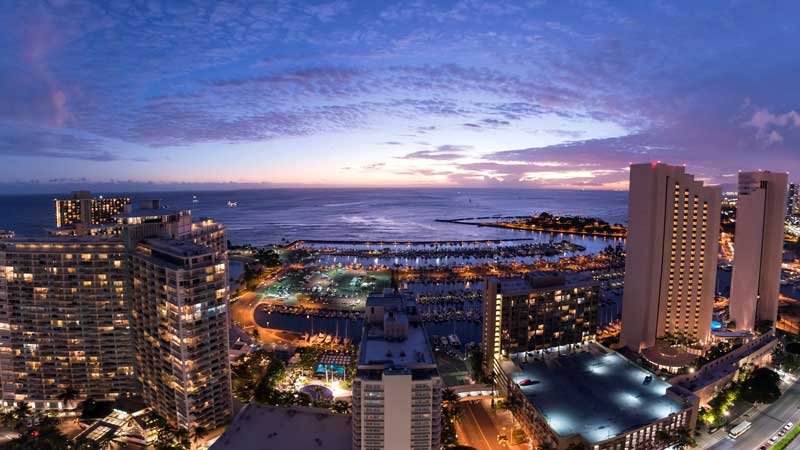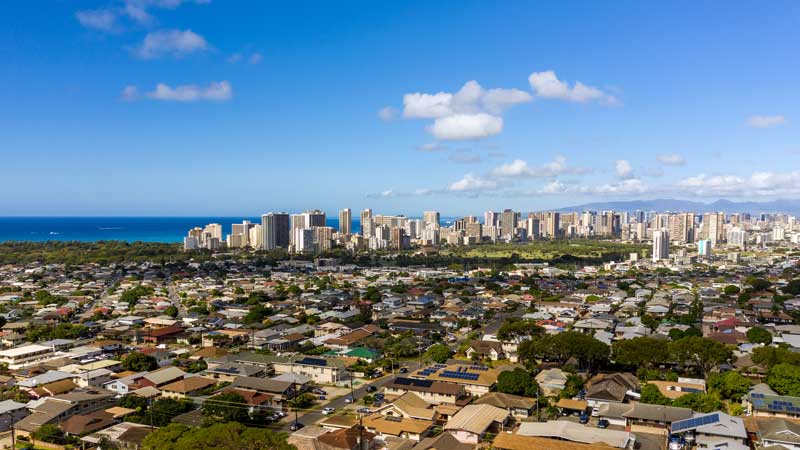
VA IRRRRL Refinance - Aerial View of Oahu with Ko olau Mountains and Coastal Horizon

2026 Oahu Condo BAH to Home Purchase Price – VA Loan Guide

2026 Oahu condo BAH to home purchase price conversion is one of the most important planning tools for service members and veterans buying on Oahu. While Oahu offers some of the highest BAH rates in the country, most available inventory consists of condos with HOA fees, and those HOA costs—not price alone—often determine whether a VA loan is approved.

This guide focuses only on Oahu condos, showing how 2026 BAH converts into realistic condo purchase prices using VA loans and a conservative 5.5% housing-cost assumption designed to stress-test HOA risk.

In 2026, Oahu condo buyers using VA loans must account for high HOA fees that significantly reduce buying power. Using a conservative 5.5% housing-cost assumption helps veterans estimate realistic condo prices and avoid VA residual income failures.

2026 Oahu BAH can support condo purchases with VA loans, but HOA fees often limit affordability. A 5.5% assumption stress-tests condo buying power and protects VA residual income.

Key Takeaways

  • Oahu condos dominate VA buyer inventory
  • HOA fees often matter more than condo price
  • VA loans count HOA dollar-for-dollar
  • A 5.5% assumption models worst-case condo risk
  • Without dependents, condo affordability tightens quickly
  • Passing this model usually means a very safe deal

2026 BAH Rates – Honolulu County (Oahu)

RankWith DependentsWithout Dependents
E-1 to E-4$3333$2598
E-5$3663$2856
E-6$3912$3036
E-7$4098$3348
E-8$4302$3720
E-9$4518$3783
W-13930$3222
W-2$ 4182$ 3717
W-3$4434$3795
W-4$4551$3951
W-5$4692$4146
O-1E$4137$3660
O-2E$4398$3768
O-3E$4572$3903
O-1$3702$2997
O-2$3909$3555
O-3$4428$3819
O-4$4737$4110
O-5$4959$4224
O-6$5001$4413
O-7$5040$4494

Source: Defense Travel Management Office (DTMO), 2026 BAH Tables

What the 5.5% Condo Assumption Means

A 5.5% assumption means total annual condo-related costs are estimated at:

5.5% of the condo purchase price per year

These models:

  • HOA dues
  • Maintenance & aging-building risk
  • Insurance volatility
  • Potential special assessments

Example

  • $450,000 condo × 5.5% = $24,750/year
  • ≈ $2,060/month

This is not typical for every condo, but it is an intentionally conservative stress-test that reflects many older Oahu high-rise buildings.

VA Loan Assumptions Used (Oahu Condos)

  • VA loan, $0 down
  • 30-year fixed
  • Planning rate: 6.50%
  • 5.5% condo housing-cost assumption
  • Residual-income-focused (not just DTI)

Oahu Condo Conversion Matrix – With Dependents (2026 BAH)

VA Loan • Condo-Only • Conservative 5.5% Assumption

Rank2026 BAH (With Dependents)Est. Max Condo Price (5.5%)
E-1 to E-4$3,333~$360,000
E-5$3,663~$395,000
E-6$3,912~$420,000
E-7$4,098~$440,000
E-8$4,302~$465,000
E-9$4,518~$485,000
W-1$3,930~$425,000
W-2$4,182~$450,000
W-3$4,434~$480,000
W-4$4,551~$490,000
W-5$4,692~$505,000
O-1E$4,137~$445,000
O-2E$4,398~$475,000
O-3E$4,572~$495,000
O-1$3,702~$400,000
O-2$3,909~$420,000
O-3$4,428~$480,000
O-4$4,737~$515,000
O-5$4,959~$535,000
O-6$5,001~$540,000
O-7$5,040~$545,000

Oahu Condo Reality:

These price points generally align with older high-rise condos or smaller units, assuming HOA fees in the $700–$1,200+ range.

Oahu Condo Conversion Matrix – Without Dependents (2026 BAH)

VA Loan • Condo-Only • Conservative 5.5% Assumption

Rank2026 BAH (Without Dependents)Est. Max Condo Price (5.5%)
E-1 to E-4$2,598~$275,000
E-5$2,856~$305,000
E-6$3,036~$325,000
E-7$3,348~$355,000
E-8$3,720~$395,000
E-9$3,783~$400,000
W-1$3,222~$340,000
W-2$3,717~$395,000
W-3$3,795~$405,000
W-4$3,951~$420,000
W-5$4,146~$440,000
O-1E$3,660~$390,000
O-2E$3,768~$400,000
O-3E$3,903~$415,000
O-1$2,997~$320,000
O-2$3,555~$375,000
O-3$3,819~$405,000
O-4$4,110~$435,000
O-5$4,224~$450,000
O-6$4,413~$470,000
O-7$4,494~$475,000

Critical Insight (Without Dependents):

On Oahu, HOA fees eat residual income much faster without dependents. Many high-rise condos fail VA residual income above ~$400K unless HOA is unusually low.

How to Read These Matrices (Important)

  • These are conservative stress-test estimates, not maximum lender approvals
  • They assume high-HOA Oahu condos, not townhomes or rare low-HOA buildings
  • If a condo works under a 5.5% assumption, it almost always works in real underwriting
  • Real buying power may be higher with:
    • Lower HOA
    • Newer buildings
    • Fewer debts

Key Oahu Condo Takeaway

For VA buyers on Oahu, HOA cost—not price—is the limiting factor.

These matrices are designed to:

  • Prevent false affordability
  • Avoid failed VA escrows
  • Set realistic expectations for condo buyers

Why Oahu Condo VA Loans Fail Without Conservative Math

Most failed VA condo escrows on Oahu happen because:

  • HOA fees weren’t fully modeled
  • Buyers planned with mainland assumptions
  • Residual income was overstated
  • Building-level risks were ignored

On Oahu, the condo building often matters more than the borrower.

Authoritative Sources

Basic Allowance for Housing Rate Lookup
https://www.travel.dod.mil/Allowances/Basic-Allowance-for-Housing/BAH-Rate-Lookup/

Final Takeaway

In 2026, Oahu BAH provides real opportunity for condo buyers—but HOA costs are the deciding factor. Using a conservative 5.5% condo assumption helps VA buyers avoid false affordability and focus on condos that truly fit VA loan guidelines.

Understanding how your Oahu BAH converts into realistic condo prices—under conservative assumptions—helps you plan smarter, whether buying now or preparing for a future PCS.

view of busy Hawaii street

Red Flags When Buying a Condo: What VA Buyers in Hawaii Must Know

Red flags when buying a condo often have nothing to do with the unit itself and everything to do with the HOA, building finances, and loan eligibility. For VA buyers in Hawaiʻi, missing these red flags can lead to loan denial, surprise costs, or resale problems—even when the price looks affordable.

This guide breaks down the most important condo red flags, with special focus on VA loan rules and Hawaiʻi-specific risks.

When buying a condo, the biggest risks are hidden in the HOA’s finances, insurance, maintenance, and rental makeup—not the unit’s appearance. VA buyers face additional hurdles because condo projects must meet VA eligibility standards, and high HOA fees can break VA residual income, especially in Hawaiʻi.

Condo buyers should watch for HOA financial problems, high fees, litigation, deferred maintenance, and rental-heavy buildings. VA loans add extra requirements, and in Hawaiʻi, high HOA dues often cause VA residual income failures even when price and credit look fine.

Key Takeaways

  • Condo red flags are usually financial or legal, not cosmetic
  • HOA health matters more than unit condition
  • VA loans add project-level approval rules
  • High HOA fees can kill VA residual income
  • Many Hawaiʻi condos fail VA loans due to HOA issues
  • A condo can look affordable and still be a bad buy

1. HOA Financial Instability

An HOA with weak finances can:

  • Trigger special assessments
  • Cause sudden HOA fee increases
  • Make the condo unfinanceable
  • Hurt resale value

Red flags include:

  • Low reserve funding (often below ~70%)
  • Operating deficits
  • Reliance on special assessments
  • No recent reserve study

For VA buyers, poor HOA finances often mean project ineligibility, regardless of borrower strength.

2. High or Rapidly Increasing HOA Fees

HOA fees aren’t just annoying—they directly affect affordability and loan approval.

Red flags:

  • HOA fees above $600–$700/month
  • Steep increases over the last 12–24 months
  • No clear explanation for rising costs

Hawaiʻi Reality

Many Hawaiʻi condos exceed $1,000/month HOA, which:

  • Shrinks buying power
  • Breaks VA residual income
  • Limits future resale demand

3. VA Loan–Specific Condo Red Flags

VA loans evaluate the entire condo project, not just the buyer or unit. These issues are among the most common causes of VA loan denial.

3a. Condo Project Is Not VA-Approved (or Approval Lapsed)

Why it matters:
Most condos must be VA project approved.

Red flags:

  • HOA cannot confirm VA approval
  • Approval expired and not renewed
  • Prior approval revoked

Impact:

  • VA loan denied
  • Smaller future buyer pool
  • Lower resale value

3b. Excessive HOA Dues

VA underwriting counts HOA fees dollar-for-dollar against VA residual income.

Common issue in Hawaiʻi:
Buyers pass DTI and credit checks—but fail VA residual income solely due to HOA.

3c. High Percentage of Rentals or Short-Term Rentals

VA loans limit investor concentration.

Red flags:

  • Short-term rentals common
  • HOA does not track owner occupancy
  • Investor-heavy buildings

Once rental thresholds are exceeded, VA financing can be blocked entirely.

3d. Active or Pending HOA Litigation

Certain lawsuits make condos ineligible for VA loans, especially:

  • Construction defect cases
  • Structural or safety litigation
  • Insurance disputes

Even strong borrowers cannot override this.

4. Deferred Maintenance & Structural Concerns

Cosmetic upgrades don’t matter if the building itself is deteriorating.

Red flags:

  • Concrete spalling
  • Rust stains (rebar corrosion)
  • Cracks in slabs or walls
  • Aging plumbing or electrical systems
  • Failing elevators or fire systems

Hawaiʻi-Specific Risk

Salt air accelerates corrosion, making older high-rises especially risky for VA approval.

5. Inadequate HOA Insurance Coverage

VA guidelines require adequate hazard and liability insurance at the project level.

Red flags:

  • Coverage below replacement cost
  • High deductibles with no reserves
  • Gaps between HOA and unit-owner policies

Insurance issues can cause last-minute loan denial.

6. Pending or Undisclosed Special Assessments

Special assessments are mandatory and can destroy affordability.

Red flags:

  • “Proposed” assessments not documented
  • Upcoming major repairs
  • Vague answers from HOA

Example:
A $25,000 assessment over 36 months = ~$700/month extra out-of-pocket.

7. Unstable or Restrictive HOA Rules

Governance issues often predict future problems.

Red flags:

  • Frequent rule changes
  • Aggressive fines
  • Poor transparency
  • Inconsistent financial reporting

These issues often precede litigation or special assessments.

8. Poor Resale History

Watch for:

  • Units sitting longer than market average
  • Frequent price drops
  • Heavy seller concessions

These often indicate hidden HOA or project issues.

VA + Hawaiʻi Condo Reality Check

With condos, VA approval depends more on the building than the buyer.

Many VA buyers in Hawaiʻi are told they “don’t qualify” when the real issue is:

  • HOA fees
  • Project eligibility
  • Residual income math

The condo—not the veteran—is often the problem.

Authoritative Sources

  • U.S. Department of Veterans Affairs – VA Lenders Handbook (Pamphlet 26-7)
    https://www.benefits.va.gov/WARMS/pam26_7.asp
  • Fannie Mae Condominium Project Eligibility Guidelines
    https://singlefamily.fanniemae.com
  • HUD / FHA Condominium Approval Guide
    https://www.hud.gov
  • Community Associations Institute (CAI) – HOA Financial Health Research
    https://www.caionline.org

Final Takeaway

The biggest red flags when buying a condo are financial, legal, and structural—not cosmetic.
For VA buyers in Hawaii, overlooking HOA health and project eligibility can turn a “good deal” into an expensive mistake.

Understanding condo red flags—especially VA loan–specific ones—helps veterans make confident decisions and avoid costly surprises, whether buying now or planning ahead.

Lighthouse on coast of Waikiki in Hawaii

VA Residual Income Explained: How Veterans Qualify in Hawaii

VA residual income is one of the most important—and misunderstood—rules in the VA loan process, especially for veterans buying a home in Hawaiʻi. It determines how much money you have left each month after paying housing costs, debts, utilities, and taxes—and in Hawaiʻi, it often matters more than credit score or DTI.

VA residual income measures the money a veteran has left each month after major expenses. Hawaiʻi falls under the VA’s West Region, which has higher minimum requirements, and common costs like HOA fees and utilities play a major role in approval. When calculated correctly using BAH and VA guidelines, many service members can still qualify for a VA loan—even in one of the most expensive housing markets in the country.

Key Takeaways

  • VA residual income measures real money left over, not percentages
  • Hawaiʻi follows the VA West Region, which has higher minimums
  • HOA fees count dollar-for-dollar and often decide approval
  • BAH is fully counted as qualifying income
  • High residual income can offset higher DTI ratios
  • Many denials in Hawaiʻi come from miscalculations, not ineligibility

What Is VA Residual Income?

According to the U.S. Department of Veterans Affairs, VA residual income is:

The amount of net income remaining after deducting shelter expenses, debts, utilities, taxes, and maintenance costs.

This guideline exists to ensure veterans can comfortably afford their home, not just qualify on paper.

Why VA Residual Income Matters More Than DTI

Unlike conventional or FHA loans that focus heavily on debt-to-income ratios, VA loans emphasize actual affordability.

VA residual income:

  • Adjusts for family size
  • Accounts for the regional cost of living
  • Allows flexibility above 41% DTI
  • Has proven to reduce foreclosure risk

This is why many veterans qualify for VA loans after being denied by other lenders.

How VA Residual Income Is Calculated

1. Monthly Income

Includes:

  • Base military pay
  • BAH (fully counted)
  • BAS (if applicable)
  • Other stable income

2. Monthly Expenses Subtracted

  • VA mortgage payment (PITI)
  • Property taxes & insurance
  • HOA dues (critical in Hawaiʻi)
  • Estimated utilities
  • All recurring debts
  • Federal & state taxes

3. Remaining Amount = VA Residual Income

This is compared against the VA minimum residual income table.

VA Residual Income Minimums (West Region)

Hawaiʻi falls under the VA West Region.

Family SizeMinimum Residual Income
1$491
2$823
3$990
4$1,117
5$1,158
Each additional member+$80

These are minimums, not targets. More residual income strengthens approval.

Hawaiʻi-Specific VA Residual Income Examples

Example 1: E-6 With Dependents Buying a Condo on Oʻahu

  • Family Size: 3
  • BAH: ~$3,738
  • Purchase Price: ~$485,000
  • HOA: ~$650

Residual Income: ~$1,350
VA Minimum Required: $990

Approved, even with a tight DTI.

Example 2: O-3 With Dependents Buying a Townhome

  • Family Size: 4
  • BAH: ~$4,362
  • HOA: ~$400

Residual Income: ~$1,450
VA Minimum Required: $1,117

Strong approval, even above 41% DTI.

Example 3: E-5 Without Dependents (HOA Risk)

  • BAH: ~$2,682
  • HOA: ~$750

DTI may pass, but residual income becomes tight due to HOA.

This is one of the most common Hawaii VA loan issues.

Hawaiʻi vs Mainland: Why Residual Income Hits Differently

FactorHawaiiMainland
VA RegionWest (higher minimums)Often lower
HOA FeesVery common & highRare
UtilitiesHigherLower
CondosCommonLess common
Approval RiskResidual income-drivenDTI-driven

Same veteran, same income:

  • Mainland → Pass
  • Hawaiʻi → Tight or fail due to HOA

Why This Doesn’t Mean VA Loans Are Harder in Hawaiʻi

Hawaiʻi VA loans aren’t harder—they just require precision.

Veterans who succeed:

  • Choose HOA levels carefully
  • Adjust purchase price strategically
  • Reduce one small debt
  • Work with VA experts who understand local math

Authoritative Sources

  • U.S. Department of Veterans Affairs – VA Lenders Handbook (Pamphlet 26-7)
    https://www.benefits.va.gov/WARMS/pam26_7.asp
  • VA Residual Income Tables – Chapter 4: Credit Underwriting
    https://www.benefits.va.gov/WARMS/docs/admin26/pamphlet/pam26_7/ch04.pdf

Final Takeaway

In Hawaiʻi, VA residual income, not credit score or DTI, often decides approval.

Veterans who understand how residual income works can avoid false assumptions and discover they qualify sooner than expected.

Learning how VA residual income works in Hawaiʻi helps veterans make confident, informed housing decisions, whether buying now or planning ahead.

Hawaii Military Eligible for VA Loan

2025 Hawaiʻi BAH Rates: What You Can Really Afford With a VA Loan

If you’re stationed in Hawaiʻi or planning to PCS here, you’ve probably asked yourself one big question:

“Can my BAH actually cover buying a home in Hawaiʻi?”

In 2025, the answer for many service members is yes—if you understand how BAH, VA loans, and Hawaiʻi home prices really work together.

This guide breaks down 2025 Hawaiʻi BAH rates, realistic home purchase prices, and how military families are using VA loans to stop renting and start building equity.

Why 2025 Is Different for Military Buyers in Hawaiʻi

Several things shifted in 2025:

  • BAH rates increased to better reflect Hawaiʻi’s high housing costs
  • Home price growth slowed and stabilized
  • Sellers are more open to VA offers and concessions
  • VA loans remain $0 down with no PMI

For many military families, renting now costs as much—or more—than owning.

2025 Hawaiʻi BAH Rates (Honolulu / Oʻahu)

Honolulu County (Oʻahu) has some of the highest BAH rates in the nation, covering bases like:

  • Joint Base Pearl Harbor–Hickam
  • Schofield Barracks
  • Marine Corps Base Hawaiʻi

Here are typical 2025 monthly BAH amounts (with dependents):

  • E-4: ~$3,204
  • E-5: ~$3,513
  • E-6: ~$3,738
  • E-7: ~$3,915
  • E-8: ~$4,104
  • E-9: ~$4,308
  • O-3: ~$4,362
  • O-5: ~$4,743

The key question isn’t the BAH amount—it’s what purchase price that BAH can support.

What Home Price Your BAH Can Support in 2025

Realistic VA Loan Assumptions

To keep this practical (not salesy), these estimates assume:

  • VA loan with $0 down
  • 6.5% interest rate (planning-safe)
  • 30-year fixed mortgage
  • Principal & interest only
  • HOA, taxes, and insurance are considered separately

Enlisted (With Dependents) – Oʻahu

Rank2025 BAHEstimated Purchase Price
E-4~$3,204~$420,000
E-5~$3,513~$455,000
E-6~$3,738~$485,000
E-7~$3,915~$505,000
E-8~$4,104~$535,000
E-9~$4,308~$565,000

Best fit: Condos and townhomes, depending on HOA fees.

Warrant & Officer (With Dependents) – Oʻahu

Rank2025 BAHEstimated Purchase Price
W-2~$3,993~$520,000
O-3~$4,362~$575,000
O-4~$4,580~$605,000
O-5~$4,743~$625,000
O-6~$4,785~$635,000

O-4 and above may reach entry-level single-family homes in select areas—or newer condos with fewer compromises.

The Hawaiʻi Reality: HOA Fees Matter

This is where many online calculators get it wrong.

  • Condos: $500–$1,200+/month HOA
  • Townhomes: $300–$700/month HOA

High HOA fees reduce your purchase price ceiling, even with a strong BAH.

That’s why local VA loan guidance matters more in Hawaiʻi than almost anywhere else.

Why VA Loans Work So Well With BAH

VA loans are uniquely suited for military buyers in Hawaiʻi because they:

  • Allow $0 down, even at higher prices
  • Requires no PMI, saving hundreds per month
  • Offer more flexible credit guidelines
  • Fully count BAH as qualifying income

For many service members, VA loans turn BAH into buying power instead of rent money.

Renting vs Buying in Hawaiʻi (The Wake-Up Call)

In 2025, it’s common to see:

  • 2-bedroom rentals: $3,500–$4,500/month
  • VA mortgage payments: Similar or lower, with equity built

That’s why more military families are asking:

“Why am I paying someone else’s mortgage with my BAH?”

Frequently Asked Questions (FAQ)

Can I really buy with $0 down in Hawaiʻi?

Yes. VA loans allow $0 down, even in high-cost areas.

Does BAH count as income for VA loans?

Yes. Lenders fully count BAH when qualifying you.

Is buying smarter than renting with PCS orders?

Often yes—especially if you plan to rent the home later or hold for multiple years.

Are VA offers still competitive in 2025?

Yes. With proper structure, VA offers are being accepted regularly.

Source for 2025 Hawaiʻi BAH Rates

The 2025 BAH figures shown above are based on official U.S. Department of Defense data for the Honolulu Military Housing Area (MHA HI408), which includes Oʻahu and major installations such as Joint Base Pearl Harbor–Hickam and Schofield Barracks.

Primary Source (Official):

  • Defense Travel Management Office (DTMO) – 2025 Basic Allowance for Housing (BAH) Rates
    https://www.travel.dod.mil/Allowances/Basic-Allowance-for-Housing/BAH-Rate-Lookup/

Supporting Reference (Publicly Indexed):

  • BAHRates.info – Honolulu County, HI (HI408) 2025 BAH Tables
    https://www.bahrates.info/state/hawaii/honolulu-county-hi

BAH rates are determined annually by the Department of Defense based on local rental market data, housing costs, and dependency status. Individual rates vary by rank, ZIP code, and dependency status.

Final Takeaway: What Your BAH Can Do in 2025

In 2025, Hawaiʻi remains expensive—but BAH + VA loans give military buyers a real path to ownership.

  • E-5 to E-6: Strong condo buying range
  • E-7 to E-9: Better options and flexibility
  • O-3+: Competitive buyers
  • O-4+: Possible single-family homes with strategy

The biggest mistake military families make is assuming buying is impossible without running the numbers.
If you’re stationed in Hawaiʻi and wondering what your BAH could realistically support, learning your options early can help you avoid costly assumptions. Understanding how VA loans work in today’s market puts you in control—whether you buy now or later.

Get pre-approved to find out exactly what purchase price you can afford. Most importantly, there is no down payment requirement for VA buyers with full entitlement.

Contact Hawaii VA Loans at 808-517-6416 to talk with a VA Loan Specialist or fill out this secure online loan application to get prequalified today.

Unlocking the Benefits of VA Home Loans Affordable Homeownership for Military Families

VA Loan Usage Surges in 2025 Driven by Younger Buyers

VA home loan usage is surging in 2025—and younger veterans are leading the charge.

After a slower period during peak interest rates, the VA Loan program has rebounded strongly, with Gen Z and Millennial service members using their benefits earlier and more strategically than past generations.

This shift isn’t just a trend—it’s reshaping the future of veteran homeownership.

VA Loan Usage Is Rising Again in 2025

According to recent mortgage industry data, VA loan originations increased significantly in 2025, reversing the declines seen in 2023–2024.

Key drivers include:

  • Stabilizing mortgage rates
  • More flexible seller negotiations
  • Increased awareness of VA loan advantages
  • Younger buyers entering prime home-buying years

For the first time, veterans under 35 now represent one of the fastest-growing VA buyer segments nationwide.

Why Younger Veterans Are Using VA Loans Earlier

1. $0 Down Is a Game-Changer

Younger buyers face higher rents and slower savings growth. VA loans eliminate the largest barrier to entry:

  • No down payment required
  • No private mortgage insurance (PMI)
  • Lower interest rates than conventional loans

This allows veterans to buy sooner instead of renting longer.

2. Gen Z and Millennials Are More Financially Informed

Younger service members are:

  • Researching benefits online earlier
  • Using VA loan calculators and AI tools
  • Comparing VA loans vs conventional or FHA options

Many realize that waiting to “save 20%” isn’t necessary when they’ve already earned a VA entitlement.

3. PCS Moves Make Renting Less Appealing

With frequent relocations, younger military families increasingly view renting as a short-term loss.

VA loans allow:

  • Buying with minimal cash
  • Renting the property later (house hacking)
  • Building equity even during short assignments

This strategy is especially popular in high-cost markets like Hawaiʻi, California, and Texas.

VA Loans vs Conventional Loans for Younger Buyers

FeatureVA LoanConventional Loan
Down Payment$0 required3-20%
PMINoneRequired under 20%
Credit FlexibilityMore lenientStricter
RatesTypically lowerHigher
EligibilityVeterans & Active dutyGeneral Public

What This Means for the Housing Market

The rise in younger VA buyers is:

  • Increasing VA loan market share
  • Encouraging sellers to accept VA offers again
  • Pushing lenders to modernize VA loan processing
  • Shifting VA loans from “last resort” to “first choice”

As inventory improves, VA buyers are becoming more competitive—even without cash down.

Common Questions About VA Loans in 2025 (FAQ)

Are VA loans harder to get approved?

No. VA loans often have more flexible credit guidelines than conventional loans.

Can first-time buyers use VA loans?

Yes. Many VA buyers in 2025 are first-time homeowners under age 35.

Are VA loans still competitive in today’s market?

Yes. With seller concessions, rate buydowns, and no PMI, VA loans remain highly competitive.

Can I use my VA loan more than once?

Yes. VA loans are reusable, and many younger buyers plan multiple uses over time.

Why This Matters for Veterans in Hawaiʻi and High-Cost Markets

In expensive housing markets, VA loans provide a unique edge:

  • $0 down reduces upfront cost
  • Lower monthly payments improve affordability
  • No PMI saves hundreds per month

For younger veterans, waiting often costs more than buying.

Final Takeaway: VA Loans Are No Longer “Later in Life” Benefits

The surge in VA loan usage in 2025 proves one thing:

Younger veterans are no longer waiting—they’re buying smart and early.

As Gen Z and Millennial service members take control of their financial futures, VA loans are becoming the preferred path to homeownership, not a backup option.

If you’re a veteran or active-duty service member wondering when—or if—you should use your VA loan, learning your options early can make a major difference. Understanding how VA loans work today helps you make smarter decisions tomorrow.

Waterfront Plaza with adjacent high rise buildings in Honolulu,

If you already have a VA loan on your home in Hawaiʻi, refinancing with the VA IRRRL (Interest Rate Reduction Refinance Loan) can be one of the fastest and easiest ways to lower your monthly payment — without a new appraisal, income checks, or major paperwork.

Many Hawaiʻi homeowners use an IRRRL during rate drops or when they want to reduce monthly payments to match BAH, decrease long-term interest costs, or stabilize their budget during a PCS.

This guide breaks everything down so you can decide if a VA refinance makes sense for you right now.

What Is the VA IRRRL (VA Streamline Refinance)?

The IRRRL (often called the VA Streamline) is a simplified refinance program for military families and veterans who already have a VA loan.

What makes it “streamlined”?

  • No appraisal required
  • No income verification
  • Minimal documentation
  • Fast approval process (often 1–3 weeks)
  • Low closing costs
  • Can roll costs into the loan

This is the easiest refinance option available in the mortgage world — and it’s only for those with an existing VA loan.

Signs a VA IRRRL Might Make Sense for You

Here are the most common reasons homeowners choose a VA streamline refinance in Hawaiʻi.

1. Mortgage Rates Have Dropped

If current rates are lower than your existing VA loan rate, refinancing could reduce your payment immediately.

Even a 0.50% drop can save hundreds per month on higher-priced Hawaiʻi homes — especially VA jumbos.

2. You Want a Lower Monthly Payment

As BAH adjusts annually and Hawaiʻi living costs change, many families use an IRRRL to:

  • Lower their mortgage payment
  • Free up cash flow
  • Make housing costs more manageable

Even a small payment reduction can make a big difference over time.

3. You Want to Switch From an ARM to a Fixed Rate

If you currently have a VA Adjustable-Rate Mortgage, an IRRRL allows you to move into a stable fixed rate with minimal documentation.

This protects you from future rate increases.

4. You Want a More Predictable Budget Before PCS

Service members preparing for PCS often want:

  • A lower mortgage payment
  • A stable long-term rate
  • A more attractive property for renting

An IRRRL can reduce payment pressure and improve rental cash flow if you plan to keep the home.

5. You Want to Remove or Reduce Funding Fees From a Previous Loan

If you were eligible for a funding fee exemption (due to disability rating) but didn’t claim it at the time of your original loan, refinancing allows you to avoid future funding fees.

How an IRRRL Works (Simple Breakdown)

Here’s what the VA streamline refinance process looks like:

Step 1: Talk to a VA lender

Your lender will compare your current rate and payment to new options.

Step 2: Confirm you meet IRRRL guidelines

You must already have a VA loan and be refinancing into a new VA loan.

Step 3: Skip the appraisal (in most cases)

This is a major advantage for Hawaiʻi homes where values fluctuate.

Step 4: Choose whether to roll closing costs into the loan

Most military families do — keeping cash in their pocket.

Step 5: Close quickly

The entire refinance can be done in as little as two weeks.

VA IRRRL Requirements (Much Easier Than You Think)

You generally need:

  • An existing VA loan
  • A history of on-time mortgage payments
  • A financial benefit (lower payment or improved structure)
  • To refinance into another VA loan

No income documents needed

No tax returns.
No paystubs.
No employment verification.

No appraisal needed

A big advantage in Hawaiʻi’s competitive and high-priced markets.

IRRRL vs Cash-Out Refinance (Important Difference)

IRRRL (Streamline)

  • Lower rate/payment
  • Fast and simple
  • No cash back
  • No appraisal needed

VA Cash-Out Refinance

  • Allows you to tap into home equity
  • Requires appraisal
  • More documentation
  • Can pay off debt or fund repairs

Most Hawaiʻi homeowners choose the IRRRL when they simply want lower payments.

How Much Can an IRRRL Save You? (Hawaiʻi Example)

Let’s say:

  • Your current rate: 6.5%
  • New available rate: 5.25%
  • Loan amount: $900,000 (common on Oʻahu)

Your payment drop could be around:

  • $500–$700 per month
  • $6,000–$8,000 per year
  • Tens of thousands in long-term savings

Even a small rate reduction goes a long way on a Hawaiʻi loan balance.

When You Should Not Do an IRRRL

An IRRRL may not make sense if:

  • Your rate reduction is extremely small
  • You plan to sell very soon
  • You already have a very low rate
  • Rolling costs into the loan would negate savings

A trusted VA lender will help you run the numbers before recommending anything.

FAQ: VA Refinancing in Hawaiʻi (IRRRL Guide)

1. Do I need to live in the home to use an IRRRL?

No — occupancy rules are easier.
You only need to certify past occupancy, not current occupancy.

2. Does the IRRRL require an appraisal?

Usually no.
Most VA streamline refinances skip the appraisal entirely.

3. Can I refinance a VA jumbo loan in Hawaiʻi?

Yes — VA jumbos can also be refinanced through an IRRRL.

4. Can I get cash out with an IRRRL?

No.
If you want cash back, you need a VA cash-out refinance, not an IRRRL.

5. Are closing costs required upfront?

Not necessarily.
Most homeowners roll costs into the new loan, keeping cash in their pocket.

6. How fast does a VA IRRRL close?

Many close within 10–21 days, making it one of the fastest refinance products available.

7. Does the IRRRL lower my payment automatically?

The VA requires a net tangible benefit, which usually means a lower payment — but sometimes it’s a more stable structure (ARM → fixed).

8. Does my credit score matter for an IRRRL?

There is no minimum credit score requirement from the VA, though lenders often apply their own internal guidelines.

Final Takeaway: An IRRRL Is the Easiest Way for Hawaiʻi Veterans to Lower Their Mortgage Payment

If you want:

  • A lower interest rate
  • A lower monthly payment
  • A faster process
  • No appraisal
  • No income checks
  • A simple, stress-free refinance

The VA IRRRL is your best option.

It’s one of the most powerful benefits available to Hawaiʻi homeowners with VA loans.

Ready to See If an IRRRL Makes Sense for You?

I can help you compare your current loan to new rates in minutes — no pressure, no confusion.

Check your VA refinance eligibility
Start your VA streamline refinance today

Clear guidance. Fast answers.
Your savings start with one simple step.

Skyscrapers and partial skyline of Honolulu, Hawaii, at night

If you’re a veteran or military family in Hawaiʻi, choosing between a VA loan and a conventional loan can impact everything from your monthly payment to how fast you can get into a home.

Hawaiʻi’s high cost of living makes this decision even more important. While both loan types have advantages, the VA loan often gives veterans far more buying power — especially on Oʻahu, Maui, Kauaʻi, and the Big Island.

This side-by-side comparison breaks down everything you need to know so you can choose confidently and take full advantage of the benefits you earned.

VA vs Conventional Loans in Hawaiʻi: Quick Comparison Table

FeatureVA LoanConventional Loan
Down Payment$0 down3%–20%+
PMI (Mortgage Insurance)NoneRequired if <20% down
Credit RequirementsMore flexibleStricter
Interest RatesOften lowerUsually higher
Loan LimitsNo limit w/ full entitlementSubject to conforming limits
Closing CostsFlexible, seller can pay 4%Limited seller credits
Best ForVeterans & military familiesCivilian borrowers

1. Down Payment Requirements: VA Dominates in Hawaiʻi

Conventional loans typically require:

  • 3% down for first-time buyers
  • 5–20%+ for most purchases
  • 20% down to avoid PMI

In Hawaiʻi, where many homes cost $800k–$1.2M, that’s a massive amount to save.

With a VA loan:

  • No down payment
  • Even on homes above $1M (with full entitlement)
  • Even on VA jumbo loans

For military families priced out of mainland-style down payments, this is a game-changer.

2. PMI (Mortgage Insurance): One of the Biggest Differences

PMI is a monthly fee conventional buyers pay when they put less than 20% down.

For a $900,000 home in Hawaiʻi:
PMI can easily add $400–$700/month to the payment.

With a VA loan:

  • No PMI — ever
  • Even with 0% down
  • Saves thousands per year

This is one of the top reasons VA wins in Hawaiʻi’s high-cost market.

3. Interest Rates: VA Usually Wins

VA loans typically offer lower interest rates than conventional mortgages because they’re backed by the Department of Veterans Affairs.

In many cases, VA loan rates are 0.25%–0.75% lower than conventional rates.

That difference can save a Hawaiʻi buyer:

  • Hundreds per month
  • Tens of thousands over the loan’s life

4. Loan Limits: VA Is More Flexible in Hawaiʻi

Conventional loans follow conforming loan limits.
VA loans follow different rules:

VA Loan Limits

  • With full entitlement → NO loan limit
  • With partial entitlement → county limits apply

This means veterans can buy homes ABOVE county limits with no down payment.

Conventional loans don’t offer anything close to this flexibility.

5. VA Jumbo Loans vs Conventional Jumbo Loans

In Hawaiʻi, jumbo loans are common due to high home prices.

  • Conventional jumbo loans require:
  • Higher credit scores
  • Larger down payments (often 20%)
  • Tighter underwriting

VA jumbo loans allow:

  • $0 down (with full entitlement)
  • Lower rates
  • Easier qualification than conventional jumbo loans

This is a massive advantage for buyers on Oʻahu, Maui, and Kauaʻi.

6. Credit Requirements: VA Is More Forgiving

Conventional lenders often want:

  • 700+ credit scores for best rates
  • 660+ for standard approvals

VA loans allow:

  • Mid-500s to low-600s depending on lender
  • More flexibility for past credit events
  • Rapid rescore improvements

This helps military families who have moved often or had temporary financial hits.

7. Closing Costs: VA Sellers Can Pay More

Conventional sellers can contribute only limited credits.

With a VA loan:

Sellers can pay up to 4% toward:

  • Closing costs
  • The VA funding fee
  • Rate buydowns
  • Prepaids
  • Temporary 2–1 buydowns

This can reduce upfront costs dramatically.

8. Appraisal Differences: VA Protects the Buyer

VA appraisals have two goals:

  1. Ensure the home meets basic safety and condition standards
  2. Prevent buyers from overpaying in inflated markets

VA appraisers often move faster in Hawaiʻi because they regularly work with military buyers.

Conventional appraisals can be slightly looser in condition but offer less buyer protection.

9. Refinancing Options: VA IRRRL Is a Huge Advantage

The VA IRRRL (Interest Rate Reduction Refinance Loan) makes refinancing easy:

  • No appraisal (in many cases)
  • No income verification
  • No re-underwriting
  • Faster approvals
  • Low costs

Conventional refinances require much more documentation and stricter qualification.

10. Which Loan Helps You Buy Faster in Hawaiʻi?

Because the VA loan offers:

  • $0 down
  • No PMI
  • Lower rates
  • Higher buying power
  • Fewer cash requirements

It is almost always the faster path to homeownership for veterans and military families in Hawaiʻi.

FAQ: VA vs Conventional Loans in Hawaiʻi

1. Is a VA loan always better than a conventional loan in Hawaiʻi?

For most veterans, yes.
Lower payments, no PMI, and $0 down make VA loans the superior choice in high-cost markets.

2. Can I use a VA loan more than once?

Yes — you can use your VA loan multiple times and even restore entitlement after selling or refinancing the previous VA loan.

3. Are VA loans slower to close than conventional loans?

No.
VA loans often close in 21–30 days with an experienced lender.

4. When is conventional better?

Conventional loans may be better if:

  • You’re making a large down payment (20%+)
  • You want to avoid the VA funding fee
  • You’re buying an investment property (VA is for primary residence only)

5. Can I switch from conventional to VA later?

Yes, if the property becomes your primary residence and you meet VA eligibility.

Final Takeaway: VA Loans Give Hawaiʻi Veterans the Strongest Buying Power

For most military families, the VA loan is simply the smarter, faster, more affordable choice:

  • $0 down payment
  • No PMI ever
  • Lower monthly payments
  • Flexible guidelines
  • Stronger buying power in Hawaiʻi
  • Access to VA jumbo loans

If you’re eligible for the VA loan, it should almost always be your first option.

Ready to Find Out Which Loan Is Best for You?

I can help you compare your exact VA vs conventional numbers in minutes — personalized to Hawaiʻi’s unique market.

See how much VA loan you qualify for
Start your fast VA pre-approval

No pressure — just clear guidance from a Hawaii VA loan specialist.

Honolulu Skyline Showing Urban City Lights

The VA loan is one of the most powerful benefits available to military families living in Hawaiʻi — and it’s the fastest way to buy a home here with $0 down, no PMI, and real affordability in a high-cost market.

Most families assume Hawaiʻi is “too expensive” to buy in. But the truth is: many service members are purchasing homes sooner than expected, often with zero down payment, because they’re using VA benefits strategically.

Whether you’re stationed on Oʻahu, Maui, Kauaʻi, or the Big Island, this guide explains exactly how military families use the VA loan to buy a home quickly, affordably, and confidently.

Why the VA Loan Is Perfect for Hawaiʻi

Hawaiʻi’s cost of living is high — but the VA loan removes the biggest barriers for military buyers.

Key advantages include:

  • $0 down payment
  • No PMI requirement
  • Flexible credit guidelines
  • Higher debt-to-income allowances
  • Lower interest rates compared to conventional loans
  • Ability to use BAH to qualify

These benefits make the VA loan one of the strongest financial tools military families have, especially in Hawaiʻi.

1. Buying With $0 Down (Even on Expensive Hawaiʻi Homes)

Many service members assume they need a large down payment.

Not with the VA loan.

With full entitlement, you can buy:

  • Single-family homes
  • Condos and townhomes
  • New construction
  • VA-approved condos
  • VA jumbo homes over $1M

All with zero down, as long as you qualify with your lender.

Buying Above County Loan Limits?

You can still buy with $0 down because the VA removed traditional loan caps for buyers with full entitlement.

2. Using BAH to Cover Most (or All) of Your Mortgage Payment

One of the biggest advantages in Hawaiʻi is Basic Allowance for Housing (BAH).

Hawaiʻi BAH rates are some of the highest in the nation, which means:

  • You can qualify for a higher VA loan amount
  • Your mortgage payment is often equal to (or less than) base housing
  • You build equity instead of paying rent
  • Dual-military households have even greater buying power

For many families, BAH covers the majority of their mortgage payment.

3. Seller Credits Cover Closing Costs, Keeping Your Upfront Costs at $0

Even with $0 down, closing costs exist — unless you use seller concessions.

With a VA loan, sellers can contribute up to 4% of the purchase price toward:

  • Closing costs
  • Interest rate buydowns
  • Temporary 2-1 buydowns
  • VA funding fee
  • Prepaids and escrows

This allows many families to close with minimal or zero cash out of pocket.

4. VA Jumbo Loans Help Military Families Afford Hawaiʻi’s High-Cost Homes

A “VA jumbo loan” simply means a VA loan above the county loan limit.

In Hawaiʻi, jumbo VA loans are extremely common — especially on:

  • Oʻahu (Honolulu, Kapolei, Ewa Beach, Kailua, Mililani)
  • Maui (Kīhei, Wailuku, Lahaina)
  • Kauaʻi (Princeville, Kapaʻa)
  • Big Island (Kona, Waimea)

Benefits remain the same:

  • No down payment
  • No PMI
  • Competitive rates
  • Easier qualification than jumbo conventional loans

5. Buying a Condo or Townhome With Your VA Loan

Condos are extremely popular among military buyers because they offer:

  • Lower price points
  • Less maintenance
  • Strong long-term rental potential

You only need to make sure the building is VA-approved.

6. Assumable VA Loans: A Secret Weapon for $0 Down + Low Rates

Many sellers in Hawaiʻi have VA loans with 2–3% interest rates from previous years.

You can assume those loans — meaning you take over:

  • Their low interest rate
  • Their existing loan balance
  • Their remaining loan term

This is one of the fastest and most cost-effective ways for military families to buy.

7. PCS Moves Make Homeownership a Smart Long-Term Strategy

Buying during a PCS to Hawaiʻi is common because:

  • Rents are extremely high
  • BAH offsets your payment
  • You build equity during your tour
  • You can rent the home out when you PCS again
  • VA loans allow multiple uses with entitlement restoration

8. Fast Pre-Approval Makes Everything Faster

The quickest route to owning a home in Hawaiʻi:

  1. Get VA pre-approved
  2. Know your price range
  3. Work with a VA-experienced agent
  4. Make competitive offers
  5. Use BAH + seller credits
  6. Close in as little as 21–30 days

FAQ: Buying a Home in Hawaiʻi With $0 Down Using the VA Loan

1. Can military families really buy a home in Hawaiʻi with $0 down?

Yes — the VA loan allows eligible families to purchase with no down payment, even in high-cost areas.

2. Is it harder to qualify for a VA loan in Hawaiʻi?

No. VA guidelines are the same nationwide, and Hawaiʻi’s strong BAH can increase your buying power.

3. What credit score is needed?

Most lenders approve VA loans starting in the mid-500s to low-600s.

4. Can BAH really cover most of the mortgage?

Often, yes — especially for E-5 and above or dual-military households.

5. Are seller credits common in Hawaiʻi?

They’re widely used and can cover closing costs, rate buydowns, and more.

6. Can I buy a condo with the VA loan?

Yes — as long as the project is VA-approved.

7. Are assumable VA loans popular?

Yes, especially when buyers want low rates and lower payments.

8. Can I buy a home if I’m PCSing to Hawaiʻi?

Absolutely. Many families buy during PCS to avoid high rents and build equity.

Final Takeaway: Military Families CAN Buy Homes in Hawaiʻi With $0 Down

With the VA loan, military families have unmatched buying power:

  • Zero down payment
  • No PMI
  • BAH support
  • Seller credits to reduce upfront costs
  • Jumbo loan capability
  • Assumable low-rate options

Homeownership in Hawaiʻi is more achievable than most families realize — and it can happen faster than you think.

Ready to See Your $0 Down VA Home Options in Hawaiʻi?

I can help you:

Find out how much VA loan you qualify for
Start your VA pre-approval quickly and easily

No pressure. No confusion.
Just clear guidance from a Hawaiʻi VA loan expert who knows the market and understands military life.

Waikiki Beach, Oahu Island Hawaii, cityscape

Even with today’s interest rates, veterans and military families in Hawaiʻi still have powerful advantages that make buying a home faster, easier, and more affordable than most people think.

The truth is this:
Hawaiʻi is one of the most expensive housing markets in the U.S.—but it’s also one of the best places to use your VA loan.

Between $0 down, no PMI, flexible credit guidelines, and access to assumable low-rate mortgages, veterans have a shortcut to homeownership that most buyers don’t.

Below is a simple, step-by-step breakdown of the fastest ways to get into a home in Hawaiʻi, even when mortgage rates feel high.

1. Use Your VA Loan With $0 Down to Maximize Speed

Most buyers spend years saving for a down payment.

Veterans don’t have to.
The VA loan remains the fastest path to homeownership in Hawaiʻi because:

  • No down payment needed
  • No PMI (private mortgage insurance)
  • Lower monthly payments
  • Flexible credit requirements
  • Higher debt-to-income flexibility

This immediately removes the #1 barrier that stops most Hawaiʻi buyers from entering the market.

2. Get a VA Pre-Approval Before You Start House Hunting

If you want to buy quickly, pre-approval is your superpower.

In Hawaiʻi—where inventory moves fast—agents and sellers don’t take offers seriously unless a VA pre-approval letter is ready to go.

A strong VA pre-approval:

  • Shows sellers you’re ready and qualified
  • Speeds up your escrow timeline
  • Helps you know your price range right away
  • Gives you confidence when you submit offers

This is often the difference between getting the house… or watching someone else move into it.

3. Find a VA-Experienced Real Estate Agent Who Knows Hawaiʻi

Not all agents understand VA loans.
Not all agents understand Hawaiʻi’s unique market either.

A VA-experienced agent will:

  • Know which properties are VA-eligible
  • Understand condo approval rules
  • Write stronger VA offers
  • Leverage seller concessions
  • Avoid delays with VA appraisal and tidewater
  • Spot assumable VA loans you can take over

This alone can eliminate weeks from your buying timeline.

4. Look for Assumable VA Loans — The Fast Track to a 2–3% Rate

This is one of the biggest secret weapons for veterans in 2025–2026.

Many sellers in Hawaiʻi still have VA loans with amazing 2–3% interest rates.
If their loan is assumable, you can take over:

  • Their low interest rate
  • Their existing loan balance
  • Their remaining loan term

This instantly beats today’s rates—and can lower your payment by hundreds per month.

Why this is fast:

  • No need to negotiate a new rate
  • No waiting for market changes
  • No rate buydowns needed
  • Simplified loan approval process

5. Use Your BAH to Qualify and Cover Your Payment

One of the most overlooked tools is your Basic Allowance for Housing (BAH).

In Hawaiʻi, BAH levels are among the highest in the nation, which means you can:

  • Qualify for a higher VA loan amount
  • Cover most (or all) of your monthly payment
  • Buy sooner instead of waiting to save more money

For many active-duty families, BAH effectively becomes your built-in mortgage payment.

6. Focus on VA-Approved Condos and Townhomes for a Faster Closing

Many single-family homes in Hawaiʻi receive multiple offers and high competition.

VA-approved condos and townhomes often:

  • Have quicker seller responses
  • Are more affordable
  • Allow faster closings
  • Fit into PCS timelines
  • Have lower monthly costs than renting

7. Use Seller Credits to Lower Your Interest Rate or Closing Costs

Veterans can negotiate seller concessions—something conventional buyers struggle with.

You can ask the seller to pay for:

  • Rate buydowns
  • Closing costs
  • VA funding fee
  • Repairs or credits
  • Temporary buydowns (2-1 buydown is popular)

These concessions can get your interest rate down without you paying out of pocket, which dramatically speeds up your homebuying timeline.

8. Improve Your VA Buying Power With Rapid Credit Optimization

You don’t need perfect credit for a VA loan.
However, higher credit = lower rates + easier approvals = faster homeownership.

Fast fixes that veterans commonly use:

  • Pay down revolving card balances
  • Remove duplicate collections
  • Boost credit limits
  • Correct errors on credit reports
  • Rapid rescore through your lender

These steps can improve your score in days, not months.

9. Understand VA Appraisal Guidelines to Avoid Delays

The VA appraisal is designed to protect you—not slow you down.

But buyers who don’t understand the rules often cause unnecessary delays.

Fastest ways to avoid issues:

  • Choose homes in good condition
  • Avoid unpermitted additions
  • Ensure utilities are on for inspection
  • Use agents familiar with tidewater procedures
  • Have comps ready to support value

10. Work With a Local Hawaiʻi VA Loan Specialist

Not a mainland lender.
Not a call center.
A Hawaii-based VA loan expert who:

  • Understands BAH
  • Knows local underwriting flexibility
  • Works with local appraisers
  • Moves files quickly
  • Coordinates with military relocation schedules

FAQ: Buying a Home Fast in Hawaiʻi With the VA Loan

1. Is it still possible to buy a home quickly in Hawaiʻi with today’s rates?

Yes.
Veterans and military families often buy faster than civilian buyers because of VA advantages such as $0 down, flexible credit guidelines, and strong BAH.

2. How long does a VA loan take to close in Hawaiʻi?

Most VA loans close in 21–30 days, depending on:

  • appraisal timing
  • condo approval (if applicable)
  • seller responsiveness
  • how prepared your documents are

With a VA-experienced lender, it can be even faster.

3. Does the VA loan really require zero down?

Yes — for eligible buyers with full entitlement.
No down payment is required on approved homes, including many Hawaii VA jumbos over $1 million.

4. Can BAH really cover most of my mortgage payment?

In many cases, yes.
Hawaiʻi has some of the highest BAH rates in the country, giving military families a major advantage in qualifying and budgeting.

5. Are assumable VA loans really faster?

They can be.
When assuming a seller’s VA loan, you skip rate shopping and often get a 2–3% interest rate, which dramatically lowers your payment.
Approval is slightly different but often quicker than starting a brand-new loan.

6. Does a high interest rate mean I shouldn’t buy?

Not necessarily.
Many veterans buy now because:

  • Hawaiʻi prices rarely drop
  • BAH offsets the payment
  • Assumable loans offer low rates
  • You can refinance later with an IRRRL if rates fall

Waiting often costs more than acting.

7. What credit score do I need to buy fast with a VA loan?

Most lenders can approve VA loans with scores in the mid-500s to low-600s, though higher credit means better rates.
Fast credit optimization can raise scores in days.

8. Should I buy or rent during a PCS to Hawaiʻi?

Buying often makes sense because:

  • Hawaiʻi rents are extremely high
  • Many military families gain equity quickly
  • You can rent the home out after PCS
  • VA loans offer $0 down affordability

Final Takeaway: Veterans Can Still Buy a Home in Hawaiʻi Faster Than Most People Think

Even with today’s interest rates, veterans have advantages that no other buyers have:

  • $0 down
  • No PMI
  • Higher debt flexibility
  • Strong BAH levels
  • Access to assumable 2–3% loans

When you combine these benefits with the right strategy, buying a home in Hawaiʻi becomes not only possible—but fast, smart, and affordable.

You’ve earned this benefit.
Now it’s time to use it.

Ready to See How Fast You Can Buy a Home in Hawaiʻi?

Whether you’re comparing loan options, checking your eligibility, or want to know your real VA purchasing power, I can walk you through it in minutes.

Get your VA buying plan — fast, simple, and personalized to Hawaiʻi.
See how much VA loan you qualify for today.
Start your VA pre-approval and explore $0 down options.

Waikiki Beach, Oahu Island Hawaii, cityscape sunset

If you’re a veteran or military family in Hawaiʻi, understanding VA loan limits is one of the fastest ways to know how much home you can afford right now — with $0 down and no PMI.

The good news?
VA loan limits in Hawaiʻi are higher than almost anywhere else in the country, especially in high-cost counties like Oʻahu.

Even better?
Many veterans don’t realize the VA no longer sets traditional “caps” for qualified borrowers with full entitlement. That means the number most people call “VA loan limits” isn’t actually a hard limit—it’s a guideline for zero-down borrowing power.

This guide breaks everything down clearly so you know exactly how much VA loan you can qualify for, whether you’re buying on Oʻahu, Maui, Kauaʻi, or the Big Island.

What Are VA Loan Limits in Hawaiʻi?

VA loan limits represent the maximum loan amount the VA will guarantee without requiring a down payment.
Even though the VA removed loan caps for borrowers with full entitlement in 2020, loan limits still matter for:

  • buyers who have already used some entitlement
  • buyers with a current VA loan
  • buyers assuming an existing VA loan
  • jumbo loan calculations
  • zero-down eligibility

For everyone else with restored or full entitlement?
You may be able to borrow far above these limits with $0 down, depending on your lender qualifications.

Current Hawaii VA Loan Limits by Island (High-Cost Breakdown)

Oʻahu – High-Cost County

Oʻahu traditionally carries the highest limits because of its market prices.
If you’re shopping in Honolulu, Kapolei, Ewa Beach, Mililani, Kailua, or Kāneʻohe, this number is especially important.

Maui County

Wailuku, Kahului, Kīhei, Lahaina, and Upcountry communities also fall under higher-than-national-average loan caps.

Kauaʻi

Lihue, Kapaʻa, Princeville, and Koloa typically fall into similar limit patterns.

Hilo / Kona (Big Island)

Still generous compared to mainland loan caps — especially helpful as prices rise in Kona and Waimea.

Full Entitlement vs Partial Entitlement (Why Most Veterans Can Borrow More Than They Think)

Here’s the easiest way to understand it:

If you have a FULL entitlement → there is no official loan limit

You can borrow above county limits with $0 down as long as your income and credit qualify.

If you have a PARTIAL entitlement → loan limits DO apply

Examples:

  • You currently have a VA loan on another property
  • You’ve defaulted on a previous VA loan
  • You used entitlement and didn’t restore it
  • You want to keep your current VA home loan and buy another

Knowing your entitlement status is the first step to knowing your zero-down eligibility.

How Much Can You Borrow With a VA Loan in Hawaiʻi Right Now?

Here’s how lenders actually determine your VA borrowing power:

1. VA County Loan Limits (Guideline)

This acts as the baseline for partial-entitlement buyers.

2. Your debt-to-income ratio (DTI)

Most lenders allow:

  • 41% baseline DTI
  • Higher DTI with strong compensating factors (BAH, residual income, credit)

3. Your BAH (Basic Allowance for Housing)

In Hawaiʻi, BAH is extremely generous and significantly increases purchasing power.

Can You Get a VA Jumbo Loan in Hawaiʻi? Yes — Very Easily.

A “VA Jumbo Loan” simply means:
Any VA loan above the standard county limit.

Because Hawaiʻi is high-cost, jumbo VA loans are extremely common — especially on Oʻahu, Maui, and Kauaʻi.

Benefits stay the same:

  • $0 down (with full entitlement)
  • No PMI
  • Competitive rates
  • Flexible guidelines
  • Often easier to qualify for than jumbo conventional loans

Why VA Loan Limits Matter in Hawaiʻi’s High-Cost Market

Even with full entitlement, understanding loan limits helps you:

  • Estimate how much home you can afford right now
  • Compare VA vs conventional in Hawaiʻi
  • Understand whether zero-down is possible
  • Plan future purchases if you keep the current VA propertyAvoid surprises during underwriting

Hawaiʻi’s unique combination of high BAH, high prices, and military presence makes the VA loan one of the strongest homebuying tools in the state.

Real Example: How Loan Limits Affect Zero-Down Eligibility

Let’s say you currently own a condo in Kapolei with an active VA loan.
You want to buy again, this time in Mililani.

Because you have partial entitlement tied up, you’ll use the county loan limit formula to calculate:

  • how much entitlement remains
  • whether a down payment is required
  • how much the VA will guarantee

Veterans with no remaining entitlement may still buy — they may just need a down payment.

With full entitlement restored, however?
You could buy anywhere on Oʻahu with:

  • $0 down
  • no PMI
  • lender-approved maximum amounts well above county limits

How to Restore Your VA Entitlement (If You Already Own a Home)

Many veterans don’t realize you can restore entitlement multiple times, even if you’ve used the VA loan before.

You can restore entitlement if:

  • You sold the home
  • You refinanced out of a VA loan
  • Your VA loan was paid off at closing
  • You paid the VA back after a default

VA Loan Limit Myths (That Confuse Most Buyers in Hawaiʻi)

  • Myth #1: “There’s a max VA loan amount.”
    Truth: Not with full entitlement.
  • Myth #2: “I need a huge down payment in Hawaiʻi.”
    Truth: $0 down is possible even above county limits.
  • Myth #3: “Jumbo loans require 20% down.”
    Truth: VA jumbo can be zero down with full entitlement.
  • Myth #4: “Loan limits are the same across all islands.”
    Truth: Oʻahu is usually the highest.

FAQ: Hawaii VA Loan Limits

1. Do VA loan limits still apply in Hawaiʻi?

Yes — but only for borrowers with partial entitlement.
If you have full entitlement, there is no official loan limit, and you can buy above the county limit with $0 down, as long as you qualify with your lender.

2. What is the VA loan limit on Oʻahu?

Oʻahu is considered a high-cost county, so its loan limit is traditionally higher than the national average. Exact numbers update yearly, but the takeaway remains the same:

  • Military families can typically buy well above these limits with $0 down when full entitlement is restored.

3. Do VA loan limits affect how much I can borrow?

Only if you have reduced or partial entitlement.
With full entitlement, your borrowing power is based on:

  • income
  • BAH
  • debt-to-income ratio
  • credit
  • lender guidelines

Not the county limit.

4. Can I buy a home over $1 million in Hawaiʻi with a VA loan?

Yes.
Many buyers on Oʻahu, Maui, and Kauaʻi purchase VA jumbo homes over $1M with zero down. Qualification depends on your income and debt, not the purchase price.

5. What if I already own a home with a VA loan?

You may still be able to:

  • buy again using remaining entitlement, or
  • restore full entitlement if you sell or refinance the original VA loan.

This determines whether loan limits apply.

6. Do VA loan limits affect condos?

Not directly — the key for condos is whether the project is VA-approved.
Loan limits only matter if you’re using partial entitlement.

7. How do I find out how much VA loan I qualify for?

A quick VA pre-approval will tell you your exact borrowing power, including:

  • max loan amount
  • whether loan limits apply
  • $0-down eligibility
  • your estimated monthly payment

Final Takeaway: You Can Borrow More With a VA Loan in Hawaiʻi Than Almost Anywhere Else

Hawaiʻi’s VA loan limits and high BAH rates give veterans and military families incredible purchasing power, even in one of the most expensive real estate markets in the country.

If you understand:

  • your entitlement
  • your county loan limit
  • your borrowing power

You can buy a home here faster, easier, and with less money down than you might think.

Ready to Find Out How Much VA Loan You Qualify for in Hawaiʻi?

Whether you’re stationed on Oʻahu, planning a PCS move, or already living in Hawaiʻi and exploring your options, I can help you understand your true borrowing power with the VA loan — fast, simple, and personalized.

With one quick conversation, you can learn:

  • Your exact VA loan eligibility
  • How much you can borrow with $0 down
  • Whether loan limits apply to you
  • Your estimated monthly payment
  • If you qualify for a VA jumbo loan on Oʻahu, Maui, Kauaʻi, or the Big Island

No pressure. No confusing jargon.

Just clear answers from a Hawaiʻi-based VA loan specialist who knows the local market and understands military life.

Get Your Personalized VA Loan Assessment Today

Click below to start your free VA homebuying plan — it only takes a few minutes, and it could put you one step closer to owning a home in Hawaiʻi.

Start Your VA Pre-Approval
Talk With a Hawaii VA Loan Expert