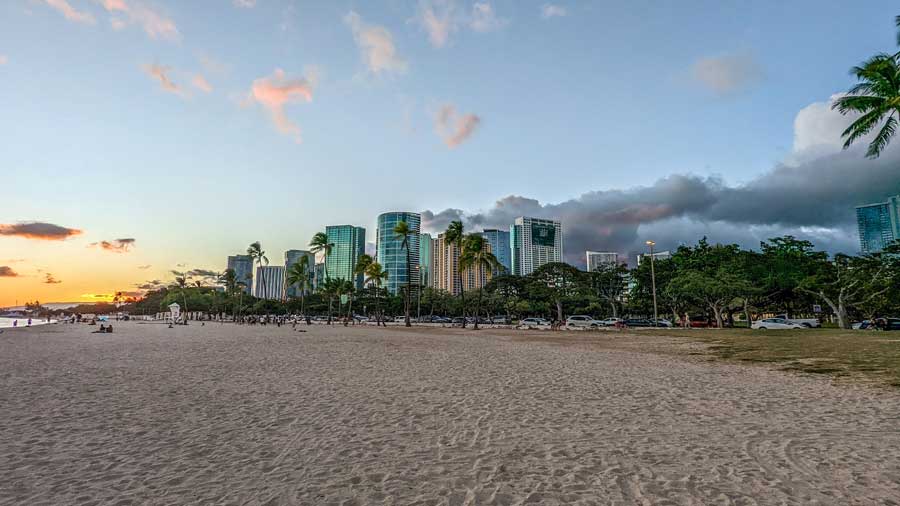
Tourist on the beach in Waikiki Hawaii

If you’re PCSing to Hawaii, using a PCS to Hawaii VA loan can be one of the smartest financial moves you make, if you understand Hawaii’s housing market, military timelines, and VA-specific rules before you arrive.

This guide walks service members and military families through everything you need to know about buying a home in Hawaii with a VA loan, from pre-PCS planning to closing, without costly surprises.

Military members PCSing to Hawaii can use a VA loan to buy a primary residence with $0 down. Success depends on understanding BAH, entitlement, condo approvals, and Hawaii’s fast-moving market.

TL;DR

  • You can buy a home in Hawaii with a VA loan while PCSing
  • $0 down is possible, even with high home prices
  • BAH plays a major role in affordability
  • Condos and appraisals require extra attention
  • Working with a Hawaii-based VA loan specialist matters

Key Takeaways

  • A PCS to Hawaii VA loan can make homeownership possible with $0 down
  • BAH significantly improves affordability
  • Condo approval and appraisals are critical in Hawaii
  • Early planning reduces stress and risk
  • Local VA loan expertise makes a real difference

What to Expect When PCSing to Hawaii

A PCS to Hawaii is unlike any other duty station change. Housing inventory is tight, prices are higher than most mainland markets, and timelines move fast—especially on Oʻahu.

Common challenges PCS buyers face:

  • Limited housing near bases
  • Competitive offers and short escrow periods
  • High rents that rival mortgage payments
  • Confusion around VA loan condo approvals

The good news: VA loans are extremely well-suited for Hawaii—when used correctly.

Can You Buy a Home in Hawaii With a VA Loan While PCSing?

Yes. Active-duty service members PCSing to Hawaii are eligible to use a VA home loan, as long as the property will be their primary residence.

VA loans allow PCS buyers to:

  • Purchase with no down payment
  • Avoid monthly PMI
  • Use flexible credit standards
  • Qualify using BAH as income

You do not need to wait until you arrive in Hawaii to start the process.

When Should You Start the VA Loan Process?

Ideally, 60–90 days before your PCS date.

Starting early allows time to:

  • Obtain or update your VA Certificate of Eligibility (COE)
  • Get fully pre-approved (not just pre-qualified)
  • Understand your realistic purchase range
  • Identify VA-approved condos or neighborhoods

Waiting until arrival often leads to rushed decisions or missed opportunities.

Understanding BAH & Affordability in Hawaii

Hawaii has some of the highest BAH rates in the country, and lenders can count BAH as qualifying income on a VA loan.

Your BAH affects:

Maximum purchase price

Monthly payment comfort

Rent vs buy comparison

Before house hunting, run real numbers using:

Buying vs Renting During a PCS to Hawaii

Many service members default to renting—but in Hawaii, renting can be just as expensive as owning.

Buying with a VA Loan

  • Build equity instead of paying high rent
  • Lock in housing costs
  • Potential rental income after future PCS
  • No down payment required

Renting

  • Extremely competitive market
  • Rising rents
  • No long-term financial return

Buying isn’t always the right choice—but VA loans give you flexibility most buyers don’t have.

VA Loan Entitlement for PCS Buyers

Most PCS buyers have full VA loan entitlement, even if they’ve used a VA loan before.

Key points:

  • Full entitlement = no VA loan limit in Hawaii
  • Entitlement can often be restored
  • PCS orders help document occupancy intent

Learn more here: VA Loan Entitlement

Condos, HOAs & VA Approval in Hawaii

Condos are popular near bases—but not all condos are VA-approved.

This is especially important near:

  • Pearl Harbor / Hickam
  • Schofield Barracks
  • Kaneohe Marine Corps Base

A VA-approved condo list and local knowledge can save weeks of frustration.

VA Appraisals & Hawaii Home Conditions

VA appraisals in Hawaii focus on:

  • Fair market value
  • Safety and livability
  • Deferred maintenance issues

Because of Hawaii’s climate, appraisers pay close attention to:

  • Roof condition
  • Termite damage
  • Electrical and plumbing issues

This is where local VA loan experience matters.

Common PCS to Hawaii VA Loan Mistakes

Avoid these PCS pitfalls:

  • Waiting until arrival to get pre-approved
  • Assuming every condo qualifies for VA financing
  • Ignoring HOA dues in affordability calculations
  • Using a mainland lender unfamiliar with Hawaii VA rules

PCS timelines are tight—mistakes are expensive.

VA Loan Guidance for Your PCS to Hawaii

Always putting clients and their families first. As a VA Loan Specialist in Hawaii, Elias helps service members and veterans navigate PCS moves with confidence, so buying a home in Hawaii feels clear, not overwhelming.

From fast COE assistance and clear next steps to competitive VA loan options and local Hawaii insight, Elias works one-on-one with military families to make the transition smoother. Whether you’re buying before you arrive or shortly after landing, having a local Honolulu VA loan officer on your side can make all the difference.

If you’re PCSing to Hawaii and want trusted, local VA loan guidance, Elias is here to help you understand your options, your numbers, and your timeline—so you can move forward with clarity and peace of mind.

Tourist and Surf boards on the beach in Waikiki Honolulu

VA appraisal fees in Hawaii are a required part of the VA home loan process, helping protect veterans by ensuring a property meets VA safety standards and is priced fairly — especially important in high-cost markets like Oʻahu and Maui.

This guide explains how VA appraisal fees work, how much they cost in Hawaiʻi, and what veterans should expect during the process.

Quick Summary

  • VA appraisal fees are set by the VA, not the lender
  • Fees vary by property type and island
  • VA appraisals are different from home inspections
  • The appraisal protects the veteran, not the bank

Key Takeaways

  • VA appraisal fees are regulated by the VA
  • Fees vary slightly by island and property type
  • VA appraisals protect veterans — not lenders
  • Local expertise helps avoid delays and surprises

Most Hawaii VA appraisal fees range from a few hundred dollars, depending on the property type and island. They are required, regulated by the VA, and designed to protect veterans from overpaying or buying unsafe homes.

What Is a VA Appraisal?

A VA appraisal is an evaluation ordered by the Department of Veterans Affairs to determine a home’s fair market value and confirm that it meets the VA’s Minimum Property Requirements (MPRs). The purpose of the appraisal is to protect veterans by ensuring the property is safe, structurally sound, and not overpriced for the local market. Unlike conventional appraisals, VA appraisals go beyond value alone and include basic health and safety standards designed to safeguard the veteran’s long-term investment.

VA Appraisal Fees in Hawaii

VA appraisal fees are set by the Department of Veterans Affairs, not by lenders or appraisers. This ensures consistent pricing and prevents veterans from being overcharged.

Typical VA Appraisal Fees in Hawaii

Fees can vary slightly by island and property type, but generally reflect:

  • Higher travel and logistics costs
  • Limited appraiser availability
  • Hawaii’s unique property conditions

Oʻahu (Honolulu County)

  • Covers Honolulu, Pearl City, Kapolei, Kailua, Kāneʻohe
  • Most common VA appraisals in Hawaii
  • Faster turnaround times due to higher appraiser availability

Maui County

  • Includes Maui, Molokaʻi, and Lānaʻi
  • Fees may be slightly higher due to travel and access
  • Condos and rural properties may take longer

Hawaiʻi County (Big Island)

  • Covers Hilo, Kona, Waimea, and rural areas
  • Larger land parcels can affect timelines
  • Lava zones and rural access may impact appraisal complexity

Who Pays the VA Appraisal Fee?

In most cases:

  • The buyer pays the VA appraisal fee upfront
  • The fee can sometimes be paid by the seller or lender as a credit
  • The fee cannot be rolled into the loan amount

This fee is non-refundable once the appraisal is ordered.

surfing waves in oahu hawaii

VA Appraisal vs Home Inspection

Many buyers confuse these — they are not the same.

VA Appraisal

  • Required by the VA
  • Focuses on value and safety
  • Ordered through the VA portal
  • Protects the veteran

Home Inspection

  • Optional but strongly recommended
  • More detailed evaluation of systems and structure
  • Ordered by the buyer
  • Protects long-term investment

A VA appraisal does not replace a home inspection.

VA Minimum Property Requirements (MPRs)

VA appraisers check for:

  • Safe electrical, plumbing, and roofing
  • Adequate access and utilities
  • No major health or safety hazards

In Hawaii, common MPR considerations include:

  • Roof condition due to sun and salt exposure
  • Moisture, mold, and termite issues
  • Access roads and easements for rural properties

What Happens If a Home Doesn’t Pass the VA Appraisal?

If issues are found:

  • Repairs may be required before closing
  • The seller can complete repairs
  • In some cases, a reconsideration of value (ROV) may be requested

A knowledgeable VA loan specialist can help navigate this process efficiently.

Bottom Line: VA Appraisal Fees in Hawaii

VA appraisal fees are a small but important part of buying a home with a VA loan in Hawaii. They exist to protect veterans, ensure fair pricing, and confirm the home is safe to live in.

Understanding how the process works — especially in Hawaii’s unique market — helps avoid surprises and delays.

Your Trusted Hawaii VA Loan Specialist

Always putting clients and their families first.
Elias is a local Honolulu VA loan officer who helps service members and veterans navigate every step of the Hawaii VA home loan process — including VA appraisals and property requirements — with clarity and confidence.

VA appraisals in Hawaii can raise questions regarding property condition, repairs, timelines, and Minimum Property Requirements (MPRs), particularly in unique island markets such as Oʻahu, Maui, and the Big Island. Having a local VA loan specialist who understands how these appraisals work can help prevent delays and keep your transaction on track.

When you work with Elias, you’ll get:

Clear, step-by-step guidance through the VA appraisal process

Local insight into Hawaii-specific property standards

Competitive VA rates tailored to Hawaii buyers

If you want to understand what a VA appraiser looks for — or how to prepare a property before the appraisal — connect with a specialist who puts your goals first.

Call (808) 817-6416 to speak with a Hawaii VA loan specialist
Take the next step toward owning a home in paradise today!

surfing waves in oahu hawaii

VA loan limits in Hawaii often confuse buyers, but in 2026, most veterans can buy well above county limits with $0 down if they have full VA entitlement.

This guide breaks down how VA loan limits really work, when they matter, and how they apply specifically to Honolulu (Oʻahu), Maui, and the Big Island.

Quick Summary

  • VA loans do not have a true loan limit for veterans with full entitlement
  • Loan limits only matter if you have partial (impacted) entitlement
  • Hawaii’s high home prices often require VA jumbo loans, which can still be $0 down

If you have full VA entitlement, Hawaii VA loan limits won’t restrict how much home you can buy — even in Honolulu or Maui. Limits only affect veterans with an active or previous VA loan.

Key Takeaways

  • VA loan limits don’t cap most Hawaii buyers
  • Full entitlement = no down payment, even for jumbo homes
  • County limits only matter with partial entitlement
  • Expert Hawaii-specific guidance can save tens of thousands

Are There VA Loan Limits in Hawaii in 2026?

Short answer: No — not in the traditional sense.

The VA doesn’t cap how much you can borrow. Instead, it limits how much of your loan it will guarantee to the lender (typically 25%).

What most people call “VA loan limits” are actually county conforming loan limits used only when entitlement is partially used.

How VA Loan Entitlement Works

What Is VA Loan Entitlement?

VA entitlement is the portion of your loan that the VA guarantees for the lender. This guarantee allows lenders to offer:

  • $0 down payments
  • Lower interest rates
  • No monthly mortgage insurance

Full VA Entitlement (Most Hawaii Buyers)

You typically have full entitlement if:

  • You’ve never used your VA loan benefit, or
  • Your previous VA loan was paid off, and entitlement was restored

With full entitlement:

  • No loan cap
  • No down payment required (even above county limits)
  • VA jumbo loans are allowed

Tourist and Surf boards on the beach in Waikiki Honolulu

Partial Entitlement

You may have partial entitlement if:

  • You still own a home with a VA loan, or
  • A prior VA loan wasn’t fully paid off

In this case, county loan limits matter and may trigger a down payment.

VA County Loan Limits in Hawaii (2026)

Hawaii is considered a high-cost state, so county loan limits are higher than the national baseline.

These limits only matter if you have partial entitlement.

Honolulu County (Oʻahu)

  • Used for homes in Honolulu, Pearl City, Kapolei, Kailua, Kāneʻohe
  • Higher limits reflect Oʻahu’s elevated home prices
  • Many VA buyers still qualify for $0 down with full entitlement

Maui County

  • Includes Maui, Molokaʻi, and Lānaʻi
  • Median prices often exceed mainland jumbo thresholds
  • VA jumbo loans are common and fully allowed

Hawaiʻi County (Big Island)

  • Covers Hilo, Kona, Waimea, and surrounding areas
  • Lower prices than Oʻahu or Maui, but still above national averages
  • Partial entitlement buyers may still need minimal down payments

When a Down Payment Is Required

A down payment is only required if:

  • You have partial entitlement, and
  • The loan amount exceeds what your remaining entitlement can support

How the VA Guarantee Formula Works

Lenders require the VA to guarantee 25% of the loan.
If your remaining entitlement doesn’t cover that 25%, you make up the difference as a down payment.

Example: Honolulu VA Loan Limit Scenario

  • Purchase price: $1,100,000
  • Veteran has partial entitlement
  • County conforming limit applies
  • Result: Small down payment required to meet the 25% guarantee

With full entitlement, the same purchase could be done with $0 down.

Tourist on the beach in Waikiki Hawaii

What Is a VA Jumbo Loan in Hawaii?

A VA jumbo loan is simply a VA loan above county conforming limits.

Key advantage in Hawaii:

  • No PMI
  • Often $0 down with full entitlement
  • Far more flexible than conventional jumbo loans

Types of VA Loans Affected by Loan Limits

VA Purchase Loans

  • Primary residence only
  • Most Hawaii buyers qualify with $0 down

VA Cash-Out Refinance

  • Loan limits may apply if entitlement is impacted

VA Streamline Refinance (IRRRL)

  • Loan limits rarely matter
  • Simplified refinance process

Common VA Loan Limit Myths

❌ “VA loans have a hard cap.”

❌ “You can’t buy expensive homes in Hawaii with VA loans.”

❌ “Jumbo loans require 20% down.”

✔ Reality: With full entitlement, VA loans remain one of the most powerful tools for Hawaii veterans.

Do VA Loan Limits Matter in Hawaii?

For most veterans, VA loan limits in Hawaii don’t matter at all.

What does matter:

  • Your entitlement status
  • County pricing trends
  • Working with a lender who truly understands Hawaii VA loans

Before you move forward, it helps to get personalized VA loan guidance from someone who works with Hawaii veterans every day.

Your Trusted Hawaii VA Loan Specialist

Always putting clients and their families first.
Elias is a local Honolulu VA loan officer dedicated to helping service members and veterans secure Hawaii VA home loans with clarity and confidence.

Whether you’re buying your first home, navigating VA loan limits, or exploring jumbo VA options in high-cost areas like Oʻahu or Maui, you’ll get:

Fast Certificate of Eligibility (COE) support

Clear, step-by-step VA loan guidance

Competitive VA rates tailored to Hawaii’s market

If you want straightforward answers and expert insight from someone who understands Hawaii VA loans inside and out, connect with a specialist who puts your goals first.

Call (808) 517-6416 to speak with a Hawaii VA loan specialist
Take the next step toward owning a home in paradise today!

View of cityscape Hawaii

In Hawaii, VA loans are often cheaper than conventional loans once you factor in no PMI, fewer pricing adjustments, capped fees, and long-term interest savings. While conventional loans may appear cheaper at first glance, VA loans frequently cost veterans less over time.

TL;DR — VA Loans vs Conventional Loans in Hawaii

  • VA loans have no monthly PMI
  • Conventional loans use risk-based pricing (LLPAs)
  • VA loans cap lender fees
  • Down payment penalties hit conventional buyers harder
  • In Hawaii’s high-priced market, VA loans often win long-term

Key Takeaways

  • VA loans often cost less long-term in Hawaii
  • No PMI makes a major difference
  • LLPAs increase conventional loan costs
  • Funding fee ≠ higher total cost
  • Personalized comparisons matter most

Are VA loans really cheaper than conventional loans in Hawaii?
It’s one of the most common — and most misunderstood — questions veterans ask when buying a home in the islands.

At first glance, conventional loans can look competitive. But once you dig into monthly costs, hidden pricing adjustments, and long-term interest, the picture often changes dramatically.

Let’s break it down clearly.

Why This Question Matters More in Hawaii

Hawaii’s housing market magnifies every cost difference:

  • Higher home prices
  • Larger loan balances
  • Bigger impact from pricing adjustments
  • More expensive PMI over time

Small differences on paper can turn into tens of thousands of dollars over the life of a loan.

The Biggest Cost Difference: PMI vs No PMI

Conventional Loans

Most conventional buyers pay private mortgage insurance (PMI) if they put less than 20% down.

  • Monthly cost
  • Can last years
  • Adds no equity
  • Often overlooked in comparisons

VA Loans

VA loans have no monthly PMI — ever.

That alone can save Hawaii buyers hundreds per month and tens of thousands over time.

Loan Level Price Adjustments: The Hidden Cost

Conventional loans rely heavily on loan level price adjustments (LLPAs).

These increase costs based on:

  • Credit score
  • Down payment
  • Loan size
  • Property type

VA loans largely avoid LLPAs, which means:

  • More consistent pricing
  • Fewer hidden penalties
  • Better affordability in high-cost markets like Hawaii

Upfront Costs: Funding Fee vs Conventional Fees

VA loans include a one-time funding fee, which often causes confusion.

But here’s the key:

  • It’s usually financed into the loan
  • Many veterans are completely exempt
  • It replaces PMI and other risk fees

Conventional loans don’t have a funding fee, but PMI and LLPAs often cost more over time.


Hawaii cityscape view during night

Side-by-Side Cost Comparison (Simplified)

FeatureVA LoanConventional Loan
Down payment$0 requiredOften 3–20%
Monthly PMINoneRequired under 20%
Risk-based pricingMinimalHeavy (LLPAs)
Fee capsYesNo
Long-term costOften lowerOften higher

Even then, many Hawaii buyers are surprised when VA loans still come out ahead once the total cost is calculated.

When Conventional Loans Might Be Cheaper

To be fair, there are cases where conventional loans can compete:

  • Large down payment (20%+)
  • Excellent credit
  • Short ownership timeframe

Why VA Loans Often Win Long-Term in Hawaii

Hawaii buyers tend to:

  • Hold homes longer
  • Finance larger balances
  • Feel PMI costs more acutely

That’s where VA loans shine — by removing monthly insurance, limiting pricing penalties, and keeping costs predictable.

Common Myths (Cleared Up)

“VA loans are more expensive because of the funding fee.”
Not once do PMI and LLPAs factor in.

“Conventional loans always have lower rates.”
Rates don’t tell the full cost story.

“VA loans only help with the down payment.”
They reduce costs for the entire life of the loan.

How to Know Which Loan Is Cheaper For You

There’s no universal answer — only a personal one.

The right comparison looks at:

  • Monthly payment
  • Cash to close
  • Long-term interest
  • PMI vs no PMI
  • Pricing adjustments

That’s why personalized analysis beats online averages every time.

Helpful Tools for Hawaii Buyers

These tools help you see real numbers, not assumptions.

Final Thoughts for Hawaii Veterans

In Hawaii’s high-cost market, the loan that looks cheaper upfront isn’t always the one that costs less over time. For many veterans, VA loans remove layers of hidden pricing, eliminate PMI, and offer long-term savings that conventional loans simply can’t match.

With clear information and trusted VA loan guidance, veterans can compare options confidently, avoid costly surprises, and choose the loan that truly fits their goals — not just the lowest advertised rate.

VA Funding Fee Explained

The VA funding fee is a one-time cost that helps keep the VA loan programs running. It can usually be financed into the loan, and many veterans are fully exempt. For Hawaii buyers, understanding how it works can save thousands upfront.

VA Funding Fee Explained

  • The VA funding fee is a one-time charge, not monthly
  • It helps fund the VA loan program (no PMI required)
  • Most buyers finance it into the loan
  • Many veterans are 100% exempt
  • The fee varies by down payment and VA loan usage
  • In Hawaii, financing the fee often makes sense

Key Takeaways

  • The VA funding fee is a one-time cost
  • Many veterans are fully exempt
  • Most buyers finance it into the loan
  • It replaces costly monthly PMI
  • Personalized analysis beats assumptions

VA Funding Fee Explained: What Veterans Need to Know

The VA funding fee is one of the most talked-about and most misunderstood parts of using a VA loan. For many veterans buying in Hawaii, the fee sounds intimidating at first, especially given higher home prices. But once you understand how it works, it often becomes far less concerning.

Let’s break it down clearly, without lender jargon or pressure.

What Is the VA Funding Fee?

The VA funding fee is a one-time fee charged on most VA loans. Its purpose is simple:

It helps keep the VA loan program running without requiring monthly mortgage insurance.

That’s one of the biggest reasons VA loans remain such a powerful benefit.

How Much Is the VA Funding Fee?

The funding fee is calculated as a percentage of the loan amount and depends on:

  • First-time vs repeat VA use
  • Size of down payment (if any)
  • Loan type (purchase, refinance, etc.)

For most first-time buyers with $0 down, the fee is typically just over 2% of the loan amount.

The key: this fee is not paid monthly and is often rolled into the loan.

Can the VA Funding Fee Be Financed?

Yes — and this is where many Hawaii buyers find relief.

Most veterans choose to:

  • Finance the funding fee into the loan
  • Avoid bringing extra cash to closing
  • Preserve savings for reserves or moving costs

In a higher-cost market like Hawaii, this strategy often makes financial sense.

Who Is Exempt From the VA Funding Fee?

Many veterans are completely exempt from paying the VA funding fee, including:

  • Veterans with service-connected disabilities
  • Veterans receiving VA disability compensation
  • Certain surviving spouses

If you’re exempt, the funding fee is waived entirely — even if it shows up on early estimates.

VA Funding Fee Info

How the VA Funding Fee Compares to PMI

This is a critical comparison.

VA LoanConventional Loan
One-time funding feeMonthly PMI
Often financedPaid every month
No PMI everPMI until equity reached

Over time, the VA funding fee often costs far less than PMI.

VA Funding Fee Myths (Debunked)

“The VA funding fee makes VA loans expensive.”
Not true — especially compared to PMI.

“You must pay it out of pocket.”
Most veterans finance it.

“Everyone has to pay it.”
Many veterans are exempt.

How the VA Funding Fee Fits Into Total Closing Costs

The funding fee is separate from standard closing costs, but it plays a big role in overall affordability.

That’s why it’s best reviewed alongside:

  • Escrow and title costs
  • Seller credits
  • Lender fee caps

A full cost breakdown gives the clearest picture.

Helpful Tools for VA Buyers

These tools help turn estimates into real numbers.

Final Thoughts for Hawaii Veterans

Hawaii’s high home prices can make any added cost feel overwhelming at first. But the VA funding fee is designed to protect veterans long-term, not burden them. When you understand how it works — and whether you’re exempt or able to finance it — it becomes just another manageable part of the process.

With clear information and experienced VA loan guidance, most veterans find that the funding fee is far less of an obstacle than they expected — and owning a home in Hawaii remains well within reach.

Hawaii VA Loan Closing Costs

VA loan closing costs in Hawaii typically range from 2% to 5% of the loan amount, but many fees are negotiable, seller-paid, or offset with credits. Veterans often bring less cash to closing than expected — especially compared to conventional loans.

VA Loan Closing Costs in Hawaii

  • Most VA buyers pay 2%–5% of the loan amount in total closing costs
  • The VA funding fee is often the highest cost, but it’s usually financed
  • Sellers in Hawaii can pay up to 4% of VA-allowable costs
  • VA loans cap and regulate lender fees (fewer surprises)
  • Many veterans come out with less cash out-of-pocket than expected
  • A personalized cost breakdown matters more than averages

Key Takeaways

  • VA loan closing costs in Hawaii typically run 2%–5%
  • Sellers often help cover costs
  • VA loans cap lender fees
  • Many veterans close with minimal cash
  • Personalized analysis beats averages every time

VA loan closing costs in Hawaii are often misunderstood — and frequently overstated. While Hawaii home prices are higher than on the mainland, VA loans remain one of the most cost-effective ways for eligible veterans and service members to buy a home in the islands.

Let’s walk through what veterans actually pay, what’s negotiable, and how smart VA buyers reduce their cash to close.

Va Loan Closing Costs in Hawaii

What Are VA Loan Closing Costs?

VA loan closing costs generally fall into three main categories:

  1. Third-party costs (title, escrow, recording)
  2. VA-regulated lender fees
  3. The VA funding fee (often financed, not paid upfront)

One major advantage of VA loans is that the VA strictly limits what lenders can charge — helping protect veterans from excessive or hidden fees.

Typical VA Loan Closing Costs in Hawaii (Realistic Ranges)

Cost TypeTypical Hawaii RangeNotes
Escrow & Title$2,000–$4,500Varies by island & home price
VA Appraisal~$750Set by VA
Credit Report$30–$60Standard
Recording Fees$300–$600County-based
Lender FeesLimited by VAOrigination capped

Many of these costs are negotiable or can be paid by the seller.

The VA Funding Fee (Often Misunderstood)

The VA funding fee is usually the highest VA-specific cost, but it’s also one of the most misunderstood.

Here’s what matters:

  • It can often be rolled into the loan
  • Some veterans are completely exempt
  • It replaces monthly PMI — saving money long-term

In Hawaii’s higher price ranges, financing the funding fee often makes more sense than paying it upfront.

Who Pays VA Loan Closing Costs in Hawaii?

This is where VA loans really stand out.

Buyers may pay:

  • Appraisal
  • Credit report
  • Some escrow and title costs

Sellers can pay:

  • Up to 4% of the loan amount toward VA-allowable costs
  • This is common in Hawaii negotiations

Lenders may offer:

  • Rate-based credits
  • Fee offsets

The result? Many VA buyers close with far less cash than they expected.

A happy veteran family standing in the yard of their new tropical Hawaii home

How Veterans Reduce VA Loan Closing Costs in Hawaii

Experienced VA buyers often reduce their costs by:

  • Negotiating seller credits
  • Working with VA-experienced lenders
  • Avoiding unnecessary add-on fees
  • Timing rate locks carefully
  • Understanding what the VA allows — and prohibits

Knowledge creates leverage at the closing table.

Common VA Loan Cost Myths (Debunked)

“VA loans are more expensive.”
Often false — they’re frequently cheaper than conventional loans over time.

“VA buyers always bring more cash.”
Not true. Many bring less, sometimes as close to $0 as possible.

“Closing costs aren’t negotiable.”
In Hawaii, they often are.

VA Loan Closing Costs FAQs (People Also Ask)

Are VA loan closing costs higher in Hawaii?

They can be slightly higher due to home prices, but VA protections often offset the difference.

Can sellers pay VA loan closing costs?

Yes — sellers can contribute up to 4% of the loan amount.

Do VA loans have hidden fees?

No. The VA caps and regulates lender charges.

How much cash do I really need to close?

It depends — many VA buyers bring far less than expected.

Helpful Tools for Hawaii VA Buyers

These tools help turn estimates into real numbers.

The combination of Hawaii’s high home prices and ongoing rate uncertainty makes understanding VA loan closing costs more important than ever. While the numbers can look intimidating at first, VA loans offer built-in protections that help veterans avoid unnecessary fees, limit lender charges, and reduce out-of-pocket costs at closing. With the right strategy, many VA buyers in Hawaii bring far less cash to the table than they expect.

Taking the time to understand which costs are negotiable, how seller credits work, and when financing certain fees makes sense can help you make confident, informed decisions. When you pair that knowledge with experienced VA loan guidance and a team that understands Hawaii’s market, navigating closing costs becomes far less stressful — and owning a home in the islands becomes a realistic, achievable goal.

Current VA Mortgage Rates - Aerial view of Waikiki looking towards Honolulu on Oahu

VA Loan Entitlement Explained for Hawaii Veterans

VA loan entitlement determines how much home you can buy, whether you can use a VA loan again, and how much flexibility you have as a Hawaii veteran homeowner.

In a high-price market like Hawaiʻi, misunderstanding entitlement can quietly limit your buying power or cost you the ability to use your VA benefit again. This guide explains how VA entitlement actually works, using real Hawaii scenarios and realities.

Quick Summary

VA loan entitlement is the portion of a VA loan that the government guarantees. In Hawaii, understanding basic and bonus entitlement is critical because higher home prices can impact how much you can borrow and whether you can reuse your VA benefit.

TL;DR

  • VA entitlement is not a loan limit
  • You have basic + bonus entitlement
  • Hawaii prices make an entitlement strategy critical
  • You can use a VA loan more than once
  • Assumptions and unpaid loans can tie up entitlement

Key Takeaways

  • VA entitlement is a guarantee, not a cap
  • Full entitlement unlocks maximum flexibility
  • Partial entitlement requires planning, not panic
  • Hawaii prices magnify entitlement mistakes
  • Expert VA guidance protects long-term benefits

view of Waikiki towards Diamond Head crater in Oahu

What Is VA Loan Entitlement?

VA loan entitlement

is the amount the Department of Veterans Affairs guarantees on your mortgage, not the amount you can borrow.

This guarantee:

  • Protects lenders
  • Allows $0 down VA loans
  • Enables better terms for veterans

Entitlement is expressed in dollars, not percentages—and it’s the backbone of your VA home-buying power.

Basic Entitlement vs Bonus Entitlement

Most confusion starts here.

Basic Entitlement

  • $36,000 guarantee
  • Covers VA loans up to $144,000 (historical baseline)

Bonus (Tier 2) Entitlement

  • Additional entitlement above $144,000
  • Tied to county loan limits
  • Essential for high-cost areas like Hawaiʻi

Together, these allow most eligible veterans to buy well above $1M with $0 down, assuming full entitlement is available and income qualifies.

VA Loan Limits in Hawaii (What They Really Mean)

VA loan limits do not cap how much you can borrow; they only affect down payment requirements if you have partial entitlement.

  • Veterans with full entitlement have no loan limit
  • Veterans with used entitlement may face down payment requirements based on county limits
  • This distinction matters enormously in Honolulu, Maui, and Hawaiʻi County.

Full vs Partial Entitlement Explained

Full Entitlement

You likely have full entitlement if:

  • You’ve never used a VA loan, or
  • You sold a prior VA-financed home and paid it off, or
  • You refinanced into a non-VA loan

With full entitlement:

  • $0 down possible (even at high prices)
  • Maximum flexibility
  • Clean slate for future VA use

Partial Entitlement

You may have partial entitlement if:

  • You still own a home with a VA loan
  • A previous VA loan wasn’t paid off
  • Someone assumed your VA loan without substitution

Partial entitlement doesn’t mean you’re “out of benefits”—but it does affect down payment math.

view of Waikiki towards Diamond Head crater in Oahu

Using a VA Loan More Than Once in Hawaii

Yes, you can use your VA loan multiple times.

Common Hawaii scenarios:

  • PCS → rent out old home → buy new home
  • Keep Oʻahu condo → buy a single-family home on the mainland
  • Sell mainland home → buy in Hawaiʻi

Each scenario impacts entitlement differently. Strategy matters.

How VA Assumptions Affect Entitlement

This is where many Hawaii veterans get burned.

If someone assumes your VA loan:

  • Your entitlement may stay tied to that property
  • You may not have full entitlement for your next purchase
  • Your future buying power can be reduced for years

The safest path is the substitution of entitlement when the buyer is VA-eligible.

Entitlement and Down Payments (Simple Example)

If:

  • County loan limit: $1,200,000
  • Your remaining entitlement covers $800,000

You may need to cover 25% of the difference as a down payment.

This is why entitlement planning is crucial before making offers in Hawaii.

Why Entitlement Strategy Matters More in Hawaii

Hawaii is different because:

  • Prices are higher
  • Small entitlement gaps = large cash requirements
  • Military families often move frequently
  • Rental retention is common

Mistakes here don’t just cost money—they cost future options.

Common VA Entitlement Mistakes Hawaii Veterans Make

  • Assuming entitlement is a loan limit
  • Letting someone assume a VA loan without substitution
  • Not checking entitlement before making offers
  • Using entitlement inefficiently on lower-value properties
  • Relying on generic mainland advice

Want to Know Exactly How Much VA Entitlement You Have?

Before you buy, sell, assume, or refinance, it’s critical to understand how your VA entitlement is actually positioned—especially in Hawaiʻi’s high-cost market.

I offer a free, no-obligation VA loan review to help you:

  • Determine whether you have full or partial entitlement
  • Calculate real down payment scenarios
  • Compare VA options without pressure
  • Protect your future VA buying power

Get trusted VA loan guidance from someone who works with Hawaiʻi veterans every day.

Request your personalized VA entitlement and loan review, educational, personalized, and always no pressure.

city view of Waikiki at night with lights and buildings

VA Assumable vs New VA Loan in Hawaii (Buyers Guide)

VA assumable vs new VA loan is one of the most important decisions Hawaii buyers face, especially with high home prices and elevated interest rates.

Both options can be powerful, but the right choice depends on interest rates, equity gaps, entitlement, and how long you plan to stay in the home. This guide breaks it down clearly, using Hawaiʻi-specific realities—not generic mainland advice.

Quick Summary

VA assumable loans

let buyers take over a seller’s low-interest rate, while new VA loans offer flexibility and full entitlement use. In Hawaii, assumables often lower payments, but new VA loans may be easier and safer depending on equity gaps and timelines.

TL;DR

  • VA assumable loans = lower interest rate, harder logistics
  • New VA loans = higher rate, cleaner process
  • Assumables often mean large cash gaps
  • New VA loans preserve full entitlement control
  • The “best” option depends on numbers, not headlines

Key Takeaways

  • VA assumables can dramatically reduce payments
  • New VA loans offer speed and flexibility
  • Equity gaps often erase assumable advantages
  • Entitlement mistakes can cost years of benefits
  • Expert guidance prevents expensive errors

Kona Big Island

What Is a VA Assumable Loan?

A VA assumable loan allows a buyer to take over the seller’s existing VA mortgage, including:

  • Interest rate
  • Remaining loan balance
  • Loan term

This is extremely attractive, because many VA loans from 2020 to 2022 carry rates far below today’s market.

What Is a New VA Loan?

A new VA loan is a fresh VA mortgage originated at current market rates.

Benefits include:

  • $0 down (when eligible)
  • No PMI
  • Flexible credit standards
  • Clean entitlement usage
  • Faster, more predictable closing

Side-by-Side Comparison: VA Assumable vs New VA Loan

FeatureVA Assumable LoanNew VA Loan
Interest RateKeeps seller’s rate (often lower)Current market rate
Down PaymentOften required (equity gap)$0 down possible
Equity GapBuyer must coverNone
Closing SpeedSlower (30–90+ days)Faster
Entitlement ImpactMay stay tied to sellerClean entitlement
AvailabilityRareWidely available
ComplexityHighModerate
Best ForCash-strong buyersMost VA buyers

Why This Decision Is Bigger in Hawaii

In Hawaiʻi:

  • Home prices are high
  • Small rate changes = big payment swings
  • Equity gaps can be six figures
  • Inventory is limited

A 2–3% interest rate difference can mean hundreds to thousands per month, making VA assumable loans very attractive—but also very risky if not structured correctly.

When a VA Assumable Loan Makes Sense in Hawaii

A VA assumable loan may be the smart move if:

  • The interest rate is significantly lower
  • You have cash or second financing for the equity gap
  • You plan to stay long-term
  • The servicer is responsive
  • Entitlement and liability are handled correctly

This strategy works best for well-prepared buyers, not first-time buyers rushing into an offer.

When a New VA Loan Is the Better Choice

A new VA loan is often better if:

  • You don’t have large cash reserves
  • You want a faster, cleaner closing
  • You need full entitlement flexibility
  • The assumable loan’s gap wipes out the rate benefit
  • You’re buying a condo or complex property

For many Hawaii buyers, the simplicity and certainty of a new VA loan are a winning choice, even at a higher rate.

pre-dawn view of Moku Island at Lanikai beach Oahu Hawaii

The Hidden Cost People Miss: The Equity Gap

This is the biggest misconception.

Example:

  • Purchase price: $1,000,000
  • Assumable VA loan balance: $700,000

You must bring $300,000 to the table.

If that cash could earn returns elsewhere—or if second financing is expensive—the “cheap rate” may not actually be cheaper.

Entitlement: The Long-Term Impact

With a new VA loan:

  • Your entitlement is clean
  • You retain full future VA buying power

With a VA assumption:

  • Entitlement may remain tied to the property
  • Seller may lose future VA flexibility
  • Substitution must be handled correctly

This matters greatly for military families who expect to PCS or buy again.

Buyer Reality Check

The smartest buyers:

  • Compare real monthly costs, not just rates
  • Factor in the opportunity cost of cash
  • Understand entitlement consequences
  • Choose flexibility when uncertain

There is no universal “best” option—only the best option for your situation.

Ready to Compare Your Best Option?

Choosing between a VA assumable loan and a new VA loan in Hawaiʻi isn’t about hype, it’s about math, timing, and long-term strategy.

Before you commit to either path, it helps to get VA loan guidance from someone who understands:

  • Hawaii pricing realities
  • VA entitlement strategy
  • Assumable loan pitfalls
  • Long-term military homeownership planning

I offer a free, no-obligation VA loan review to help you:

  • Compare assumable vs new VA loans side by side
  • Calculate the true cost of the equity gap
  • Protect your VA entitlement and flexibility
  • Decide which option is actually smarter for you

Request your personalized VA loan review. Educational, personalized, and always no pressure.

Waikiki City View

VA Assumable Homes in Hawaii: How Buyers Take Over Low Interest Rates

VA assumable homes allow buyers in Hawaii to take over an existing VA loan, keeping the seller’s interest rate, remaining balance, and terms instead of getting a brand-new mortgage at today’s higher rates.

In a high-cost market like Hawaiʻi, this strategy can be one of the smartest ways veterans and military families lower monthly payments and win homes others can’t.

Quick Summary

VA assumable homes let buyers assume an existing VA loan’s low interest rate and terms. In Hawaii, this can significantly reduce payments, but buyers must qualify and usually cover the seller’s equity gap.

TL;DR

  • VA assumable homes let buyers take over an existing VA loan
  • The biggest advantage is keeping a low interest rate
  • Buyers must qualify and usually bring funds for the equity gap
  • Sellers must secure a Release of Liability
  • Especially powerful in Hawaiʻi’s high-priced housing market

Key Takeaways

  • VA assumable homes let buyers buy at the rate
  • Hawaiʻi’s prices make assumptions uniquely valuable
  • Equity gaps and entitlement must be handled carefully
  • Seller protection through ROL is critical
  • Expert VA guidance dramatically improves success

Waikiki and Honolulu from Tantalus overlook on Oahu

What Is a VA Assumable Home?

A VA assumable home is a property with an existing VA-backed mortgage that can be transferred to a new buyer, subject to approval.

Unlike conventional loans, VA loans are assumable by law, meaning:

  • The buyer takes over the remaining loan balance
  • The interest rate stays the same
  • The original loan terms continue

This is not a refinance. It’s a transfer of the existing loan.

Why VA Assumable Homes Matter So Much in Hawaii

In Hawaiʻi, the challenge isn’t demand, it’s affordability.

VA assumable homes help because:

  • Many VA loans from 2020–2022 carry 2–4% interest rates
  • Today’s rates are often much higher
  • Keeping the old rate can save hundreds to thousands per month

On Oʻahu, Maui, and Hawaiʻi Island, this strategy can be the difference between qualifying for a home or being priced out.

The Biggest Catch: The Equity Gap

This is the #1 issue buyers underestimate.

Example:

  • Purchase price: $900,000
  • Existing VA loan balance: $650,000

The buyer must cover the $250,000 difference, typically using:

  • Cash
  • A second mortgage
  • HELOC or bridge loan
  • Structured hybrid financing

This is where many assumable deals fall apart without proper planning.

Who Can Assume a VA Loan?

VA loans can be assumed by:

  • Veterans
  • Active-duty service members
  • Non-veterans (yes, civilians can assume)

However:

  • Buyers must meet VA credit and income standards
  • The loan servicer must approve the assumption
  • A VA funding fee may apply (unless exempt)

VA Entitlement: What Sellers Must Understand

If a VA loan is assumed without the substitution of entitlement, the seller’s VA entitlement may remain tied to the loan.

Best-case scenario:

  • Buyer is VA-eligible
  • Buyer substitutes entitlement
  • Seller’s VA benefit is restored

This step is often misunderstood—and can quietly limit a seller’s future VA buying power.

Release of Liability (ROL): Absolutely Essential

A Release of Liability removes the seller’s legal responsibility for the loan.

Without it:

  • The seller can still be held liable
  • Late payments or default can damage the seller’s credit

Never assume this happens automatically. It must be documented.

How to Find VA Assumable Homes in Hawaii

VA assumable homes are rarely labeled clearly.

Smart search tips:

  • Scan listing remarks for “VA assumable” or “assumable at X%.”
  • Ask agents directly whether the seller has a VA loan
  • Focus on homes purchased or refinanced between 2020 and 2022

In Hawaiʻi, assumables are most common near:

  • Military bases
  • PCS-heavy neighborhoods
  • Veteran-owned communities

Waikiki Condos in Honolulu

Step-by-Step: How a VA Loan Assumption Works

VA loan assumptions are powerful—but they are process-heavy and often misunderstood. Below is the real-world process buyers and sellers in Hawaiʻi should expect.

Step 1: Confirm the Loan Is VA-Assumable

Verify that:

  • The loan is VA-backed
  • The loan is active and current
  • You identify the loan servicer (not the original lender)

Never rely solely on listing remarks—always confirm with the servicer.

Step 2: Review the Loan Details

Confirm:

  • Interest rate
  • Remaining loan balance
  • Monthly payment
  • Remaining loan term

This is where the value becomes clear—especially if the rate is far below today’s market rates.

Step 3: Calculate and Plan for the Equity Gap

The equity gap is the difference between:

  • Purchase price, and
  • Remaining VA loan balance

Buyers must have a clear funding plan using cash, second financing, or hybrid options.

This should be addressed before submitting an offer, not after.

Step 4: Buyer Submits the Assumption Package

The buyer submits a formal assumption application, typically including:

  • Credit and income documentation
  • Asset verification
  • Purchase contract
  • Assumption disclosures

The servicer underwrites the buyer using VA standards, but the rate and terms remain unchanged.

Step 5: Servicer or VA Approval

Some servicers can approve assumptions internally. Others require VA prior approval.

This is often the slowest step due to:

  • Servicer backlogs
  • Missing documents
  • Internal routing delays

Expect 30–90+ days.

Step 6: Address VA Entitlement and Substitution

If the buyer is VA-eligible:

  • Entitlement substitution may occur
  • Seller’s VA entitlement may be restored

If the buyer is not VA-eligible:

  • Seller’s entitlement may remain tied to the loan

This decision should be fully understood by the seller before proceeding.

Step 7: Issue the Release of Liability

The Release of Liability officially removes the seller from responsibility for the loan.

This is non-negotiable and must be issued in writing.

Step 8: Close Through Escrow

Once approved:

  • Equity funds are collected
  • Title transfers
  • The VA loan remains in place under the buyer’s name

The buyer officially assumes the loan—same rate, same terms.

Step 9: Post-Closing Verification

After closing:

  • Confirm that loan servicing reflects the new borrower
  • Retain copies of assumption approval and ROL
  • Verify seller liability is fully removed

VA Assumable Homes FAQs

Are VA loans always assumable?

Yes, but approval is required.

Can a civilian assume a VA loan?

Yes, though entitlement may remain with the seller.

Is there a VA assumption fee?

Typically, 0.5% of the remaining balance unless exempt.

Are VA assumable homes hard to close?

They can be due to equity gaps and servicer delays.

Is assuming a VA loan worth it in Hawaii?

When structured correctly, it can be one of the most powerful strategies available.

Ready to See If a VA Assumable Home Makes Sense for You?

VA assumable homes can be an incredible opportunity in Hawaiʻi, but only when the numbers, entitlement, and liability are handled correctly.

Before you make an offer or chase a low-rate headline, it helps to speak with someone who specializes in VA loans, Hawaii pricing realities, and assumption strategy, not generic mortgage advice.

I help Hawaiʻi veterans and military families:

  • Compare VA assumable homes vs. new VA loans
  • Understand the true cost of the equity gap
  • Protect VA entitlement and liability
  • Avoid costly assumption mistakes
  • Decide whether assuming a loan is truly the smart move

If you’d like, you can request a free, no-obligation VA loan review—educational, personalized, and no pressure.

Get trusted VA loan guidance from someone who works with Hawaiʻi VA buyers every day.

Request your personalized VA loan or assumable-loan review and see your best path forward.

Honolulu-Coastline

Key Benefits of the VA Home Loan in Hawaii (What Veterans Should Know)

Discover the key benefits of the VA home loan in Hawaii—$0 down, no PMI, lower rates, and why it’s the smartest way veterans buy homes in 2026.

The key benefits of the VA home loan in Hawaii make it one of the most powerful home-buying tools for veterans, active-duty service members, and eligible surviving spouses—especially in one of the most expensive housing markets in the country.

If you’re trying to buy a home in Hawaiʻi and wondering how other military families are doing it without massive down payments, the VA loan is often the answer.

Quick Summary

VA home loans in Hawaii offer $0 down payment options, no monthly mortgage insurance, competitive interest rates, flexible qualification guidelines, assumable loans, and strong refinance programs—making homeownership more achievable despite Hawaii’s high home prices.

TL;DR

  • VA loans allow $0 down, even in Hawaii’s high-cost market
  • No PMI keeps monthly payments lower
  • Competitive VA rates often beat conventional loans
  • VA loans are assumable, a major resale advantage
  • Special VA refinance options help veterans long-term
  • Key Takeaways
  • VA loans remain one of the strongest home-buying tools in Hawaii
  • $0 down and no PMI dramatically improve affordability
  • Assumable loans and refinance options add long-term value
  • Hawaii veterans benefit most when working with VA-focused experts

1. $0 Down Payment in a High-Cost Hawaii Market

One of the most important benefits of a VA home loan in Hawaii is the ability to buy with no down payment, even when home prices exceed mainland averages.

With full VA entitlement:

  • There are no VA loan limits
  • You are not required to put money down solely because of price
  • Qualification is based on income, credit, and appraisal—not arbitrary caps

This is a game-changer in markets like Oʻahu, Maui, and Hawaiʻi Island.

2. No Monthly Mortgage Insurance

Unlike conventional loans (PMI) or FHA loans (MIP), VA loans do not require monthly mortgage insurance, even with $0 down.

In Hawaii, this can mean:

  • Hundreds saved each month
  • Better debt-to-income ratios
  • Greater long-term affordability

For many veterans, this single benefit makes homeownership realistic.

3. Competitive Interest Rates Backed by the VA

Because the VA guarantees a portion of the loan, lenders often offer lower interest rates compared to conventional financing.

In Hawaii’s market, even a small rate difference can equal:

  • Tens of thousands saved over time
  • Easier qualification
  • More buying power

This is one reason VA loans remain popular even when rates fluctuate.

4. Flexible Qualification Guidelines

While lenders still set standards, VA loans are designed to be more forgiving than many conventional programs.

VA underwriting focuses on:

  • Stable income
  • Residual income (important in Hawaii)
  • Ability to repay—not just credit score alone

This helps many veterans qualify when other loan types fall short.

5. Assumable Loans: A Hidden Advantage in Hawaii

VA loans are generally assumable, meaning a future buyer may be able to take over your existing VA loan and interest rate.

Why this matters in Hawaii:

  • Low VA rates become a powerful resale advantage
  • Homes with assumable VA loans can attract more buyers
  • This feature becomes more valuable when rates rise

Many buyers don’t realize this benefit exists—until it becomes a matter of importance.

6. VA Funding Fee Flexibility

VA loans include a one-time VA funding fee, which helps keep the program running without monthly insurance.

Key points:

  • The fee can usually be rolled into the loan
  • Many veterans with service-connected disabilities are exempt
  • No monthly insurance offsets the upfront cost for most borrowers

This keeps upfront cash requirements lower, which is critical in Hawaii.

7. Powerful VA Refinance Options for Hawaii Homeowners

VA loans aren’t just for buying—they’re built for long-term flexibility.

VA IRRRL (Streamline Refinance)

  • Designed to lower the rate of payment
  • Minimal documentation
  • Faster process for existing VA borrowers

VA Cash-Out Refinance

  • Access home equity
  • Refinance into a VA loan from another loan type
  • Often used for debt consolidation or renovations

8. No Prepayment Penalty

VA loans allow you to:

  • Pay extra principal anytime
  • Pay off your loan early
  • Refinance when it makes sense

There are no penalties for smart financial decisions.

9. Built-In VA Support if Financial Hardship Happens

The VA provides additional borrower protections, including:

  • Foreclosure avoidance assistance
  • Servicer oversight
  • Veteran-specific support resources

This safety net is often overlooked but extremely valuable.

Hawaii-Specific Considerations Veterans Should Know

  • Full entitlement = no loan limits, even in high-price areas
  • Appraisals may consider island-specific property conditions
  • Local expertise matters more in Hawaii than in most states

Working with a professional who understands Hawaii VA loans can prevent costly delays.

Ready to See How These Benefits Apply to You?

If you’re considering buying or refinancing in Hawaiʻi, getting personalized guidance matters.

Before you move forward, connect with trusted VA loan guidance from a Hawaii-based expert who understands both the VA loan program and the local market.

Contact Elias to find out more about eligibility requirements for Hawaii VA home mortgages.